“Why Do You Think That Way?”

June 27, 2020

Share this article:

Likely one of the greatest leadership challenges of a generation is playing out in real time. No matter where one turns, the one-two combination of the pandemic and social tension has, in our minds, proven what we’ve known for quite a long time. We have a growing gap in effective leadership in all corners of society. The challenge is further supported by a leadership development industry that has largely failed to deliver a return on investment off the billions of dollars spent annually around the globe.


Managers at all levels are too comfortable with the logistically convenient leadership training sessions without bothering to include accountability for applying the new skills and behaviors to the organizational strategy. This creates a scenario of too much leadership content and not enough leadership context to be effective. It’s almost as if doing the same thing over and over will generate a different result!


One of the key elements of our coaching practice in applying new skills and behaviors includes creating new attitudes, which is one reason why it is not embraced fully by the leadership development industry at large. For a glimpse of a new future, we often ask our clients to take a step back and reflect on how they became who they are today. Everyone is a product of their past, so it makes sense to look at how current attitudes were formed, especially those that directly affect effective leadership!


Sociologist Dr. Morris Massey, who specialized his research on personal values, described three major periods in our lives where values and attitudes are formed. They are:


  • The Imprint Period ~ Up to the age of seven, people are like sponges, absorbing everything around them and accepting much of it as true, especially when it comes from their parents. The confusion and blind belief of this period can also lead to the early formation of trauma and other deep problems. The critical element is learning a sense of right and wrong, good and bad. This is a human construct which people assume would exist even if they were not here.


  • The Modeling Period ~ Between the ages of eight and thirteen, people are copy-cats, often their parents, but also others. Rather than blind acceptance of other’s values, they try them on like a suit of clothes, to see how they feel. At this age, people may be impressed with religion or their teachers. They may remember being particularly influenced by junior high school teachers who seemed so knowledgeable--maybe even more so than their parents.


  • The Socialization Period ~ Between fourteen and twenty-one, people are largely influenced by their peers. As they develop as individuals and look for ways to get away from the earlier programming, they naturally turn to people who seem more like them. Other influences at these ages include the media and higher education, especially those parts which seem to resonate with the values of their peer groups.


Which gets us to what we believe is the question to be asked, and answered, more frequently and honestly if leaders are going to effectively lead as part of the solution going forward:


“Why do you think that way?”


From the beginning of our coaching practice, we focus on changing attitudes in order to create new sustainable behaviors and results. Making leadership a way of life is about the leader knowing who they are more so than what they do. Therefore, this question brings the past to the present to help create a different future. The future only changes for the good when leaders focus on new solutions rather than eliminating old problems. The future only changes for the good when leaders show through their actions rather than hide behind sanitized words. The future only changes for the good when leaders embed humanity into their culture rather than through press releases, policies and procedures. The future only changes for the good when leaders think differently!


Why do you think that way and how will it change the future for the good?


Lead Well!

Follow Us:

Our Latest Insights

By Rick Lochner • October 26, 2026
...by its resiliency in uncertainty”
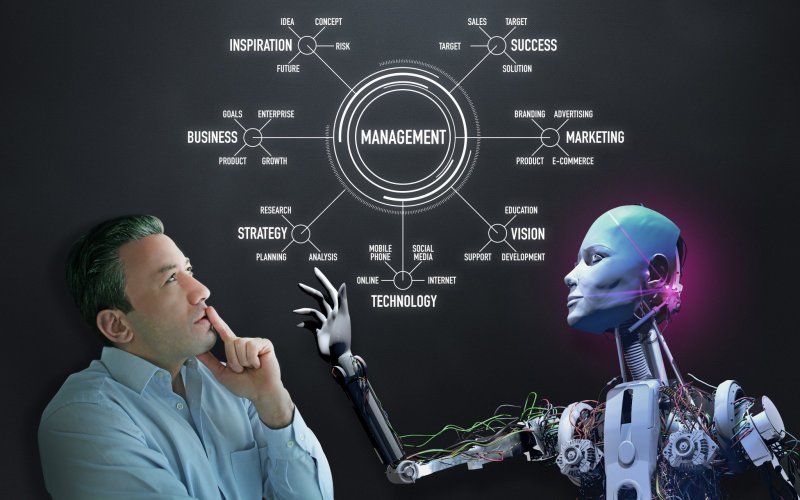
How are you leveraging AI to differentiate your business?
By Rick Lochner • September 28, 2026
...so that you can do something about it now”

By Rick Lochner • August 26, 2026
...it’s the product of their interaction.” While we’ve written intermittently about systems and processes, the current VUCA (Volatile, Uncertain, Comple, Ambiguous) business environment compels us to spend more time on how important systems thinking is to effective leadership. We are using the title quote from the late Russell Ackoff , who was a pioneer in the field of operations research, systems thinking and management science. And to illustrate the importance of the title quote, we will use a case study we came across a year ago to drive the point home. The project was a joint venture between General Motors and Toyota named the New United Motor manufacturing, Inc. or NUMMI for short. The goal of the venture was to apply the lessons Toyota learned around lean manufacturing to a failing GM plant in Fremont, California. The results were dramatic in the increased productivity of the plant proving that transformation could occur with fundamentally the same personnel in the plant before and after the switch. While the application of lean methodologies succeeded in producing much improved results, the lessons learned were ultimately lost on GM leadership. They concluded that it was the processes alone that created the change since the personnel were basically the same. In fact, it was the interrelationships between the processes that carried the success of the venture overall. Today, that plant is owned by Tesla. So, what does that mean in a VUCA business environment? It means that leaders trying to react and flex to pieces and parts of the system that are impacted by change will struggle to solve the problem in a sustainable way. It is understanding that volatility and/or complexity, while deeply affecting one particular part of the system, ultimately has systemic impacts across other systems as well. It also means that uncertainty and/or ambiguity will make it difficult to ascertain where the solution lies without looking at the business through the lens of systems thinking. Now, just for the fun of it, let’s throw in the impact of artificial intelligence (AI). The AI impact has come at the business environment with a vengeance to the point where we are already seeing the strategic and systemic challenges encountered by early adopters. In our estimation, it once again looks like business leaders are adopting AI as a workforce replacement instead of addressing where AI fits into the current and desired systems approach to the business. Once again, the absence of being able to see the interrelationships between systems creates major blind spots and lessons not learned similar to the NUMMI and GM venture. From our 2022 book, “ Finding the Missing Piece : The Impact of Effective Communications on sustainable Success”, we define systems thinking as, “...a holistic approach focusing on how a system’s components work together, how a system operates over time as well as how it operates in the context of other larger systems.” The only way systems can provide the foundational value to the organization is through leaders who can fully appreciate and understand its benefits, especially in a VUCA business environment! How are your leadership interactions enhancing the business systems? If you’re not sure, we can help . Lead Well!