...Not Enough Action

June 2, 2020

Share this article:

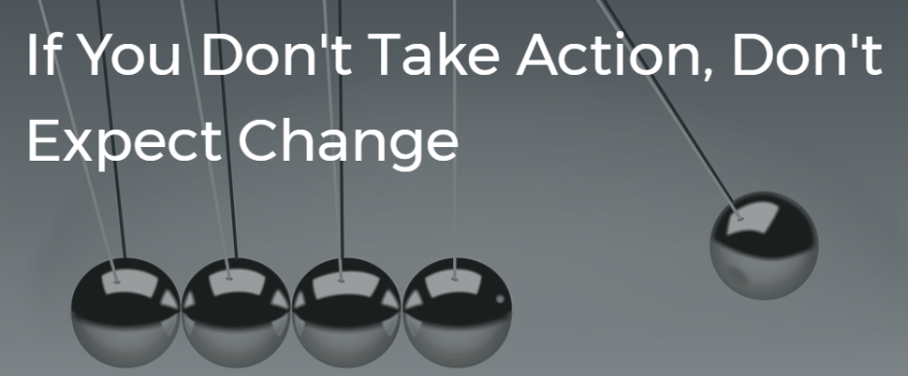
Motivational graphic with text “If You Don’t Take Action, Don’t Expect Change” and a falling pendulum among still balls

What is your call to action?

If ever there is a time for leaders of all stripes to influence change, it is now. We are recovering from an extended pandemic that saw the economy tank and where politics and science clash with the people as pawns of both sides. We witnessed a heinous abuse of individual power and lack of humanity in the death of a person of color at the hands of unthinking police officers. And through it all, the rhetoric keeps piling up. Too many leaders are saying the obvious and not enough of the hard truths. We must change the narrative from:


  • Too much Past, not enough Future ~ The financial world likes to qualify what they say by claiming past performance does not predict future returns. We hear much too much airtime on the past when what we need is a picture of the future. Without a clear destination, the leadership journey is a wasted effort!
  • Too much Wrong, not enough Right ~ Contrary to what some may believe, failure is an option when dealing with imperfect people. Why focus only on the mistakes headlined by fear-mongers when there is plenty that is right with the society. At least give what is right its fair share of mind!
  • Too much identity politics, not enough “We the people” ~ Identity politics can only divide a people no matter how well intended. Several months ago, our reading recommendation was the US Constitution which, based on discussions over the last year, most people have not read to understand the government works for the people, not the other way around!
  • Too much Training, not enough Development ~ We train skills and develop attitudes. There is not a training program in the world that will change what people believe about diversity and inclusion. That can only be accomplished by developing new attitudes over time about diversity, equality and inclusion. What we think, we do and if we want different results we have to think differently!
  • Too much Programming, not enough Policy ~ As an extension of the training versus development idea, programs by themselves will not change culture. Culture, whether it be societal, corporate, government or anything in between, can only be changed through leadership policies and associated accountability. It also takes time so it must be thought of as an investment, not a cost!
  • Too much Content, not enough Context ~ As a society, we are information-rich and knowledge-poor. Leaders must educate themselves on what information (content) means so key knowledge-based (contextual) decisions are not made in the wrong context. When we don't make the time to educate ourselves, we lose our effectiveness as leaders!
  • Too much Opinion, not enough Fact ~ Just because it feels good doesn’t make it right or true. Just because a lot of people feel that way still doesn’t make it true. A lie told a thousand times is still a lie. Know the facts of any situation and know how to put the facts into the right context for the situation. If you don't know the facts, find them and know them before tackling a conversation loaded with only opinions!
  • Too much What, not enough How ~ We’ve read and listened to dozens of people whom we respect across many walks of life prattle on about what needs to be done. Because we hear words and think in pictures, we would rather they tell us how they would implement their ideas so we can envision what their better future may look like!
  • Too much Problem, not enough Solution ~ In these trying times of unrest, we see many have taken up the mantra, “I am the problem”. That may be true, but not only for the reasons they thought. What will it take for those same people to say, “I am the solution”?
  • Too much Talk, not enough Walk ~ Which brings us back to where we began, not enough action that is meaningful to change. Everyone likes to weigh in and be counted. Far fewer either want to, or can’t, walk the walk to create the necessary actions to change to a determined future. If leaders are going to be called leaders, then it is up to them to take the action, no matter how popular or unpopular, to effectively lead the changes necessary for sustainable success for we the people!


 The Japanese have an expression that goes, “The best time to plant a tree is twenty years ago. The next best time is today.” Too much has not worked for at least the last twenty years so leaders must change the narrative by putting themselves front and center of the solution that works for all stakeholders and citizens. Don't hide behind sanitized press releases and memos. Lead from the front and fill the “not enough” gaps to change the culture to one of sustainable success!


What is your call to action? If you don’t know, we can help.


Lead Well!

Follow Us:

Our Latest Insights

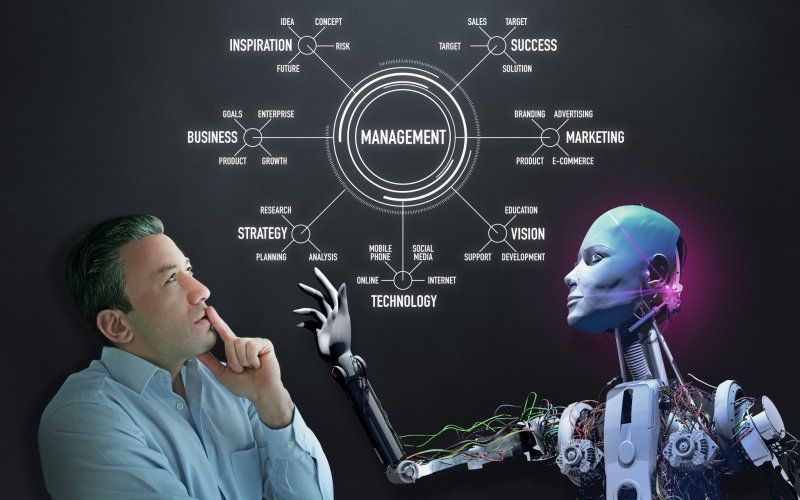
How are you leveraging AI to differentiate your business?
By Rick Lochner • September 28, 2026
...so that you can do something about it now”

By Rick Lochner • August 26, 2026
...it’s the product of their interaction.” While we’ve written intermittently about systems and processes, the current VUCA (Volatile, Uncertain, Comple, Ambiguous) business environment compels us to spend more time on how important systems thinking is to effective leadership. We are using the title quote from the late Russell Ackoff , who was a pioneer in the field of operations research, systems thinking and management science. And to illustrate the importance of the title quote, we will use a case study we came across a year ago to drive the point home. The project was a joint venture between General Motors and Toyota named the New United Motor manufacturing, Inc. or NUMMI for short. The goal of the venture was to apply the lessons Toyota learned around lean manufacturing to a failing GM plant in Fremont, California. The results were dramatic in the increased productivity of the plant proving that transformation could occur with fundamentally the same personnel in the plant before and after the switch. While the application of lean methodologies succeeded in producing much improved results, the lessons learned were ultimately lost on GM leadership. They concluded that it was the processes alone that created the change since the personnel were basically the same. In fact, it was the interrelationships between the processes that carried the success of the venture overall. Today, that plant is owned by Tesla. So, what does that mean in a VUCA business environment? It means that leaders trying to react and flex to pieces and parts of the system that are impacted by change will struggle to solve the problem in a sustainable way. It is understanding that volatility and/or complexity, while deeply affecting one particular part of the system, ultimately has systemic impacts across other systems as well. It also means that uncertainty and/or ambiguity will make it difficult to ascertain where the solution lies without looking at the business through the lens of systems thinking. Now, just for the fun of it, let’s throw in the impact of artificial intelligence (AI). The AI impact has come at the business environment with a vengeance to the point where we are already seeing the strategic and systemic challenges encountered by early adopters. In our estimation, it once again looks like business leaders are adopting AI as a workforce replacement instead of addressing where AI fits into the current and desired systems approach to the business. Once again, the absence of being able to see the interrelationships between systems creates major blind spots and lessons not learned similar to the NUMMI and GM venture. From our 2022 book, “ Finding the Missing Piece : The Impact of Effective Communications on sustainable Success”, we define systems thinking as, “...a holistic approach focusing on how a system’s components work together, how a system operates over time as well as how it operates in the context of other larger systems.” The only way systems can provide the foundational value to the organization is through leaders who can fully appreciate and understand its benefits, especially in a VUCA business environment! How are your leadership interactions enhancing the business systems? If you’re not sure, we can help . Lead Well!
Green road signs labeled “LEADER” left and “FOLLOWER” right on a pole
By Rick Lochner • July 26, 2026
This is a question every leader of any business (for profit or non-profit) of any size and any industry or market needs to regularly ask themselves. It is a critical question in that it establishes the very reason a leader earns the privilege of being called a leader.