“To attain Knowledge, add things every day…

May 22, 2017

Share this article:

…To attain Wisdom, remove things every day.”


No matter how much leaders intellectually know about the folly of trying to fit ten pounds of stuff in a five-pound bag, they seem to always go down that path, ultimately leading to frustration and stress. Of the many conversations with speaking engagement audiences, prospects and clients around how they manage their time, we will invariably get to the question, “What are you going to stop doing so you can do these other new things you need to do?” Unfortunately, the most common response, either verbally or non-verbally is, “What do you mean?”


This month’s conversation will discuss “What I mean!” I had the opportunity recently to visit Gettysburg National Park with my wife. Being a Civil War enthusiast, we were excited to visit the site of the pivotal turning point in the War. In one of the exhibits, painted on the wall in large letters is the quote, “It is hard for the old slaveholding spirit to die. But die it must.”, Sojourner Truth, October 1865. Notice her quote speaks to the spirit, not the behavior, because it is the spirit and attitude that drives a leader’s behavior. Thus, the first thing to address when looking at change is the leader’s Attitude towards managing their growth and development by effectively deciding what they will keep doing and, just as important, what they will stop doing. “Just don’t add anything new” ~ Taking this approach to the challenge misses the crucial point. As outlined in the first line of Lao Tzu’s quote in the title, to grow their knowledge leaders must add new things daily to keep up with the pace of change that is today’s business environment! To take the approach of not adding anything new because the leader’s plate is full, immediately puts them on a path to irrelevance! “Delegate what I don’t want/can’t do anymore” ~ Once again, this approach misses the point. Creating Wisdom by removing things does not imply giving them to someone else. When leaders merely move things off their plate to someone else’s on the team, nothing changes and the team is still working on things that shouldn’t be there at all. The exception to this occurs when the leader removes something from their scope of responsibility that directly adds to the knowledge of the recipient.


This scenario is explicitly communicated as such so both are clear on the purpose of the move! “Why are we still doing this?” ~ This is the key question leaders use to set up the “…removal of something every day.” I’ve heard answers to this question range from “I don’t know” and “We’ve always done this as long as I’ve been here.” to “That’s the way the manager, owner, boss likes to do it.” These answers, and those like them, are an obstacle to having a truly open conversation around why the task, function or process is still necessary. Likely the biggest obstacle to truth in this discussion is the person currently doing the task who fears losing their job. Leaders must face this challenge head on with a view to the good of the entire team and the ability to create sustainable success! Effective leaders constantly engage in conversations around what they need to do more of, what to start doing and what to stop doing to stay relevant in today’s business environment. Tackling the challenge of what to stop doing means a leader’s attitude must ultimately have a clear focus on long-term success and the knowledge and wisdom to get them there! What are you removing today to stay relevant?


Lead Well!

Follow Us:

Our Latest Insights

By Rick Lochner • October 26, 2026
...by its resiliency in uncertainty”
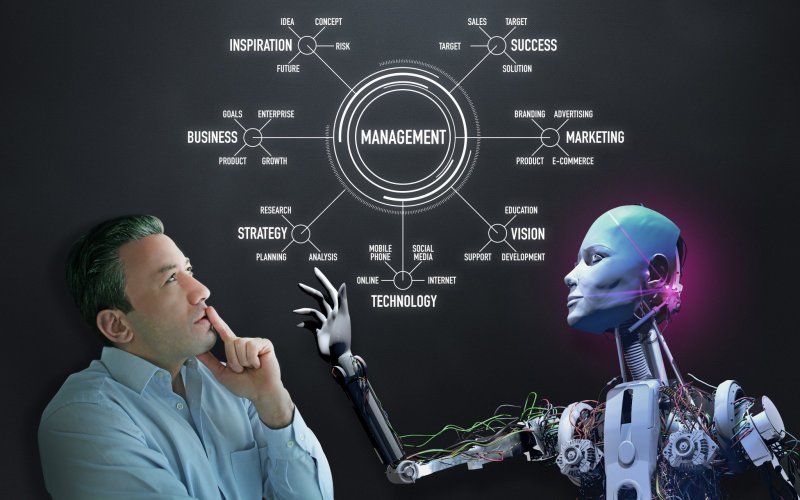
How are you leveraging AI to differentiate your business?
By Rick Lochner • September 28, 2026
...so that you can do something about it now”

By Rick Lochner • August 26, 2026
...it’s the product of their interaction.” While we’ve written intermittently about systems and processes, the current VUCA (Volatile, Uncertain, Comple, Ambiguous) business environment compels us to spend more time on how important systems thinking is to effective leadership. We are using the title quote from the late Russell Ackoff , who was a pioneer in the field of operations research, systems thinking and management science. And to illustrate the importance of the title quote, we will use a case study we came across a year ago to drive the point home. The project was a joint venture between General Motors and Toyota named the New United Motor manufacturing, Inc. or NUMMI for short. The goal of the venture was to apply the lessons Toyota learned around lean manufacturing to a failing GM plant in Fremont, California. The results were dramatic in the increased productivity of the plant proving that transformation could occur with fundamentally the same personnel in the plant before and after the switch. While the application of lean methodologies succeeded in producing much improved results, the lessons learned were ultimately lost on GM leadership. They concluded that it was the processes alone that created the change since the personnel were basically the same. In fact, it was the interrelationships between the processes that carried the success of the venture overall. Today, that plant is owned by Tesla. So, what does that mean in a VUCA business environment? It means that leaders trying to react and flex to pieces and parts of the system that are impacted by change will struggle to solve the problem in a sustainable way. It is understanding that volatility and/or complexity, while deeply affecting one particular part of the system, ultimately has systemic impacts across other systems as well. It also means that uncertainty and/or ambiguity will make it difficult to ascertain where the solution lies without looking at the business through the lens of systems thinking. Now, just for the fun of it, let’s throw in the impact of artificial intelligence (AI). The AI impact has come at the business environment with a vengeance to the point where we are already seeing the strategic and systemic challenges encountered by early adopters. In our estimation, it once again looks like business leaders are adopting AI as a workforce replacement instead of addressing where AI fits into the current and desired systems approach to the business. Once again, the absence of being able to see the interrelationships between systems creates major blind spots and lessons not learned similar to the NUMMI and GM venture. From our 2022 book, “ Finding the Missing Piece : The Impact of Effective Communications on sustainable Success”, we define systems thinking as, “...a holistic approach focusing on how a system’s components work together, how a system operates over time as well as how it operates in the context of other larger systems.” The only way systems can provide the foundational value to the organization is through leaders who can fully appreciate and understand its benefits, especially in a VUCA business environment! How are your leadership interactions enhancing the business systems? If you’re not sure, we can help . Lead Well!