

“Those who cannot change their mind...

April 24, 2023

Share this article:

...cannot change anything."


This quote from Irish playwright George Bernard Shaw leads us into this month’s discussion and part two of our discussion around critical thinking skills. Last month, we introduced the first four of eight critical thinking skills. This month, we discuss the last four critical thinking skills identified by Zety writer Michael Tomaszewski earlier this year.

Last month, we focused on the skills that support the leader’s ability to make the best decision under their present conditions and assumptions. In our current discussion, we focus on the skills that support the leader’s execution of their decision and their ability to flex their decision when the conditions and assumptions change! Before we dig into these four skills, as a reminder we define critical thinking as, “A process where leaders question their own assumptions, as well as those of others, using a mix of research, analysis, questioning and exploring new ideas to inform in a way not restricted by the subjective perspectives of peers and/or the status quo”. With that in mind, the next four critical thinking skills are:


  • Explanation: A leader’s ability to effectively communicate their decision is crucial to the overall success of the decision itself. Effective communications is defined as the sender and the receiver understanding the message in the same context. Invariably there will be those who question the decision, either out of a need for clarity or out of outright fear. The ability of the leader to effectively communicate their findings and reasoning clearly and succinctly will help answer those questions consistently and objectively. This is also why the first four skills are crucial in that they help formulate the narrative that supports the leader’s decision!


  • Self-Regulation: The ability of the leader to self-regulate means they are constantly monitoring and correcting their thinking based on the changing conditions and assumptions. The implication is that leaders are continuously challenging their sources and assumptions in the context of what is currently in front of them. Military combat leaders are trained extensively to self-regulate their thinking as the conditions on the battlefield shift dynamically and in very dramatic ways. One could argue the business battlefield that we’ve previously defined as VUCA (Volatile, Uncertain, Complex, Ambiguous) is need enough for leaders to develop this crucial critical thinking skill!


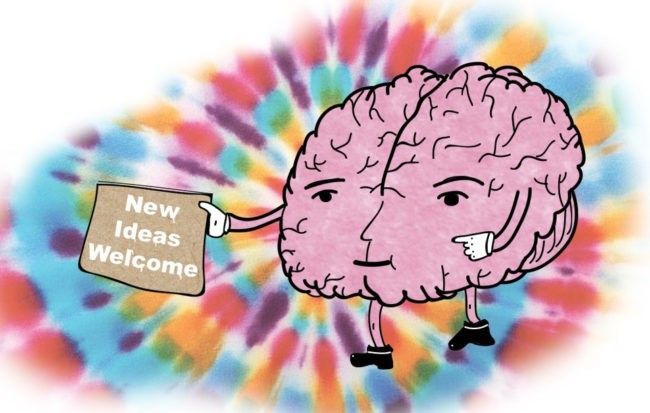
  • Open-Mindedness: Closely related to self-regulation is the ability of the leader to be open-minded to changes in their original thinking. A leader who effectively monitors their own thinking may still feel they, and they alone, must have the answer to what the new thinking suggests. Open-mindedness means the leader is comfortable accounting for other possibilities and points of view from their team. The clear implication here is that effective listening is imperative to developing this skill. It means they are not only challenging current thinking of others, but are also open to their own thinking being challenged by others!


  • Problem-Solving: The final critical thinking skill is the leader’s ability to problem-solve around unexpected problems as well as the conflict resolution that comes with the unexpected. It is that rare occasion that the original decision plays out perfectly from the moment it is made! Therefore, leaders must have the comfort level with flexing in the moment and yet never lose sight of the reason the decision was made in the first place. This skill reminds me of a key lesson learned when I was learning to fly airplanes. No matter what is going on in the cockpit, never forget that job #1 is to fly the plane!


These four critical thinking skills focus on the leader’s ability to execute and flex in their decision-making process to determine the best way forward. They outline key activities that inform the decisions leaders make each and every day in a VUCA business environment. And while there is still a role to play for AI-informed technologies, the leader leverages these technologies to support their critical thinking before, during, and after they make their decisions!


How are you leveraging critical thinking to execute your business decisions? If you’re not sure, we can help.


Lead Well!

Follow Us:

Our Latest Insights

How are you leveraging AI to differentiate your business?
By Rick Lochner • September 28, 2026
...so that you can do something about it now”

By Rick Lochner • August 26, 2026
...it’s the product of their interaction.” While we’ve written intermittently about systems and processes, the current VUCA (Volatile, Uncertain, Comple, Ambiguous) business environment compels us to spend more time on how important systems thinking is to effective leadership. We are using the title quote from the late Russell Ackoff , who was a pioneer in the field of operations research, systems thinking and management science. And to illustrate the importance of the title quote, we will use a case study we came across a year ago to drive the point home. The project was a joint venture between General Motors and Toyota named the New United Motor manufacturing, Inc. or NUMMI for short. The goal of the venture was to apply the lessons Toyota learned around lean manufacturing to a failing GM plant in Fremont, California. The results were dramatic in the increased productivity of the plant proving that transformation could occur with fundamentally the same personnel in the plant before and after the switch. While the application of lean methodologies succeeded in producing much improved results, the lessons learned were ultimately lost on GM leadership. They concluded that it was the processes alone that created the change since the personnel were basically the same. In fact, it was the interrelationships between the processes that carried the success of the venture overall. Today, that plant is owned by Tesla. So, what does that mean in a VUCA business environment? It means that leaders trying to react and flex to pieces and parts of the system that are impacted by change will struggle to solve the problem in a sustainable way. It is understanding that volatility and/or complexity, while deeply affecting one particular part of the system, ultimately has systemic impacts across other systems as well. It also means that uncertainty and/or ambiguity will make it difficult to ascertain where the solution lies without looking at the business through the lens of systems thinking. Now, just for the fun of it, let’s throw in the impact of artificial intelligence (AI). The AI impact has come at the business environment with a vengeance to the point where we are already seeing the strategic and systemic challenges encountered by early adopters. In our estimation, it once again looks like business leaders are adopting AI as a workforce replacement instead of addressing where AI fits into the current and desired systems approach to the business. Once again, the absence of being able to see the interrelationships between systems creates major blind spots and lessons not learned similar to the NUMMI and GM venture. From our 2022 book, “ Finding the Missing Piece : The Impact of Effective Communications on sustainable Success”, we define systems thinking as, “...a holistic approach focusing on how a system’s components work together, how a system operates over time as well as how it operates in the context of other larger systems.” The only way systems can provide the foundational value to the organization is through leaders who can fully appreciate and understand its benefits, especially in a VUCA business environment! How are your leadership interactions enhancing the business systems? If you’re not sure, we can help . Lead Well!
Green road signs labeled “LEADER” left and “FOLLOWER” right on a pole
By Rick Lochner • July 26, 2026
This is a question every leader of any business (for profit or non-profit) of any size and any industry or market needs to regularly ask themselves. It is a critical question in that it establishes the very reason a leader earns the privilege of being called a leader.