

“You can’t Motivate People…

March 26, 2019

Share this article:

…You can only Create a Game Worth Playing” Motivation seems to be a recurring topic in many of the coaching conversations I have so it seems fitting to discuss in some detail as it is clearly still misunderstood by so many leaders and followers. And given the timing of March Madness and the upcoming Opening Day for baseball, it seemed only appropriate to use the quote from Michael Gerber to open the discussion of how leaders can create a “Game Worth Playing”! One of the biggest misconceptions around motivation is that it can be externally applied. What is externally applied are the conditions in which a person is motivated to apply the three elements of motivation: Direction, Intensity and Persistence. As these three elements are applied to one’s behavior, that person’s motivation can be inferred by how much they apply to each of the three. From my own experience, creating a game worth playing involves three key leadership concepts aligned to create the environment, as Michael Gerber continues to say, “Which will then give some the reason and the will to try.” These three leadership concepts are:


  • Compelling Vision and Purpose ~ Every time I start working with clients on Strategic Planning, I show the TED Talk by Simon Sinek on “Start With Why”. It sets the stage for what is arguably one of the most important aspects of effective leadership. When a leader creates a compelling Vision of the future, it gives Purpose to all in that organization to give their best to make the Vision a reality. Make no mistake, though, a vision that is nothing more than corporate poetry and empty words hanging on the walls of the business and is not supported by actions that align to the Vision will have the opposite effect and actually motivate to leave the organization. Inherent in this process is the leader’s ability to effectively communicate the Vision to the organization in a way that enables every follower to give their best direction, intensity and persistence to the game at hand!


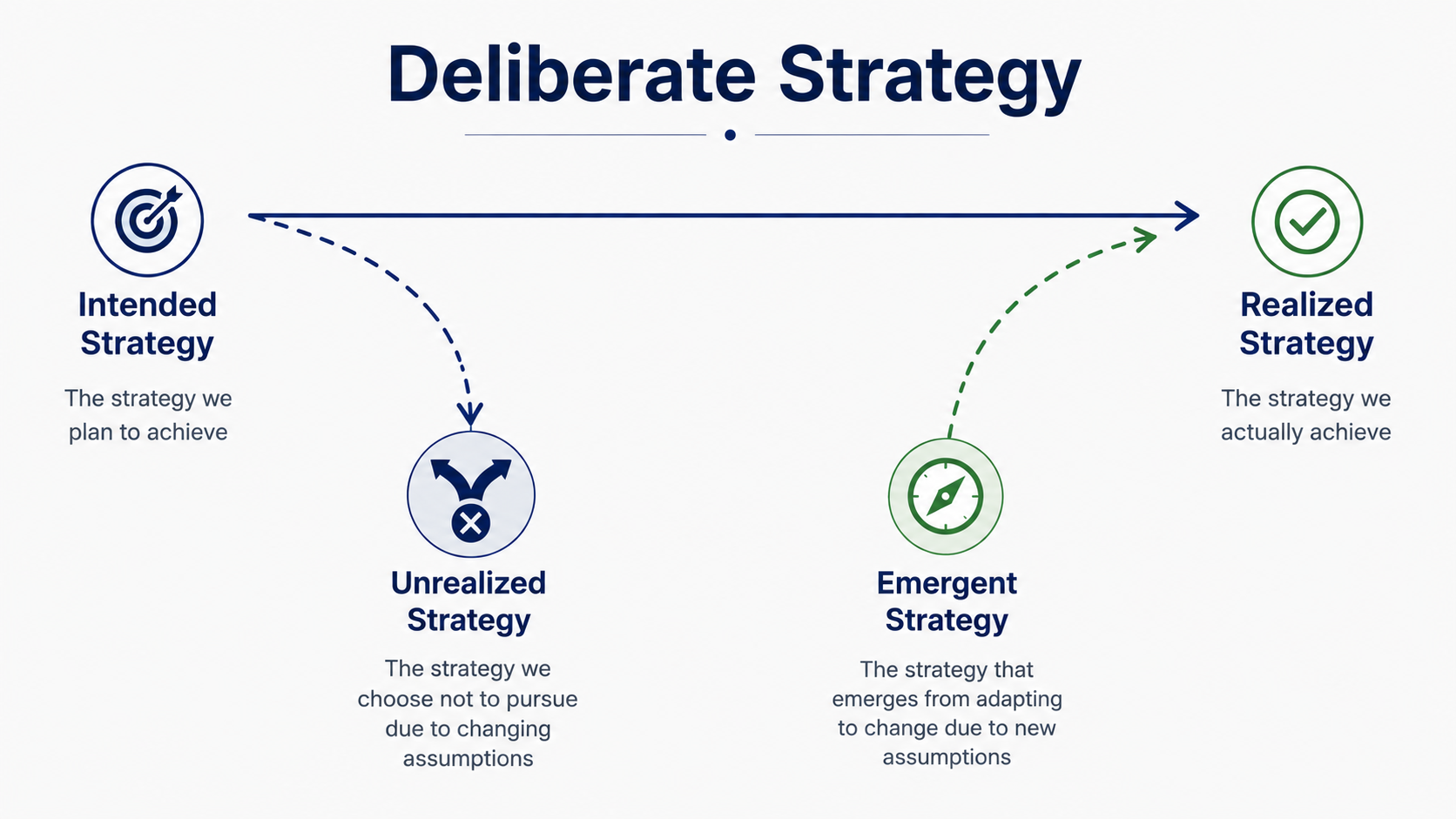
  • Competitive Strategy ~ Regardless of what type of business, for-profit or non-profit, private or public, Strategy matters. It matters because it is quite simply how the organization will compete in their marketplace. Early on in every position I’ve taken in both the military and in the corporate setting, the conversation was always about competing at our best as a team. A sports coach with a talented team can still miss the playoffs if the game plan does little to leverage the team’s ability to win the game. So, too, is a leader’s business strategy crucial to how the team will effectively compete against other businesses who presumably are thinking the same thing. Once again, effective communications is the key to a leader’s success in how they are able to embed both the stated Strategy as well as the intention behind the Strategy in such a way that the team knows exactly what they need to do to win!


  • Equipped for Success ~ The best Strategy on top of the clearest Vision still needs near flawless execution to become a reality. History is littered with failures of organizations with great intent that came up short because the moving parts were out of alignment with the Strategy. First and foremost, every organization needs the right people to execute the Strategy. When the Strategy changes, it stands to reason the talent required must change as well. This does not mean letting people go, rather it means re-training, re-equipping and re-orienting people to the new Strategy. Some will not make the cut, yet most will when it is done effectively! Equipping for success also entails providing processes and tools that support success of the new Strategy. Any team asked to support a new Strategy with processes and tools that are not aligned to that Strategy will ultimately destroy any goodwill the right people bring to the process!


Organizational motivation comes from the energy given to direction, intensity and persistence of the collective behavior of that organization. A reality many leaders forget is they cannot want success any more than the team they lead wants that success or expect results greater than the team is willing to achieve! How are you creating a game worth playing for your team? Lead Well!

Follow Us:

Our Latest Insights

By Rick Lochner • October 26, 2026
...by its resiliency in uncertainty”
How are you leveraging AI to differentiate your business?
By Rick Lochner • September 28, 2026
...so that you can do something about it now”

By Rick Lochner • August 26, 2026
...it’s the product of their interaction.” While we’ve written intermittently about systems and processes, the current VUCA (Volatile, Uncertain, Comple, Ambiguous) business environment compels us to spend more time on how important systems thinking is to effective leadership. We are using the title quote from the late Russell Ackoff , who was a pioneer in the field of operations research, systems thinking and management science. And to illustrate the importance of the title quote, we will use a case study we came across a year ago to drive the point home. The project was a joint venture between General Motors and Toyota named the New United Motor manufacturing, Inc. or NUMMI for short. The goal of the venture was to apply the lessons Toyota learned around lean manufacturing to a failing GM plant in Fremont, California. The results were dramatic in the increased productivity of the plant proving that transformation could occur with fundamentally the same personnel in the plant before and after the switch. While the application of lean methodologies succeeded in producing much improved results, the lessons learned were ultimately lost on GM leadership. They concluded that it was the processes alone that created the change since the personnel were basically the same. In fact, it was the interrelationships between the processes that carried the success of the venture overall. Today, that plant is owned by Tesla. So, what does that mean in a VUCA business environment? It means that leaders trying to react and flex to pieces and parts of the system that are impacted by change will struggle to solve the problem in a sustainable way. It is understanding that volatility and/or complexity, while deeply affecting one particular part of the system, ultimately has systemic impacts across other systems as well. It also means that uncertainty and/or ambiguity will make it difficult to ascertain where the solution lies without looking at the business through the lens of systems thinking. Now, just for the fun of it, let’s throw in the impact of artificial intelligence (AI). The AI impact has come at the business environment with a vengeance to the point where we are already seeing the strategic and systemic challenges encountered by early adopters. In our estimation, it once again looks like business leaders are adopting AI as a workforce replacement instead of addressing where AI fits into the current and desired systems approach to the business. Once again, the absence of being able to see the interrelationships between systems creates major blind spots and lessons not learned similar to the NUMMI and GM venture. From our 2022 book, “ Finding the Missing Piece : The Impact of Effective Communications on sustainable Success”, we define systems thinking as, “...a holistic approach focusing on how a system’s components work together, how a system operates over time as well as how it operates in the context of other larger systems.” The only way systems can provide the foundational value to the organization is through leaders who can fully appreciate and understand its benefits, especially in a VUCA business environment! How are your leadership interactions enhancing the business systems? If you’re not sure, we can help . Lead Well!