
We are great at Goal Setting

November 26, 2018

Share this article:

We suck at Goal Achieving!


Full disclosure, I am a goals geek! I’ve used goals most of my life beginning at age 12 when I set my first 2 significant goals. The first was to join the Boy Scouts and become an Eagle Scout which I did 2 years later. The second was to graduate from the United States Military Academy at West Point which I did 10 years later. To this day, goals continue to play a significant role in our ongoing success at RPC Leadership Associates, Inc. As we reflect on our current goals in the season of Thanksgiving and create new personal and professional goals for the new year, let’s take a deeper look through the research of Edwin Locke and Gary Latham at the five ways goals have high motivational impact.


  • Challenging Goals are more likely to lead to higher performance ~ We never really know what we are capable of until we push ourselves, or are pushed by others, to the perceived outer limits of our comfort zone. Of course, challenging goals may not deliver desired results on the first attempt. Goals were never meant to be linear as life isn’t that cooperative. However, even if the path changes, the end goal doesn’t have to. If I were to go back to every goal not achieved on the first attempt, I can still articulate what was learned from each situation that helped to ultimately achieve the desired result!


  • Specific Goals are more likely to lead to higher performance ~ When working with clients on goal-planning, we always spend time understanding the difference between tangible and intangible goals. “I want to be a better leader” is a statement I hear a lot in my profession. However, as an intangible goal, we have to make it tangible through several iterations of what it means or what it looks like when one is a better leader. Once a clear picture of success is made specific, achieving the goal becomes almost second nature!


  • Feedback motivates towards higher performance ~ In my many years as a leader, I’ve come to realize the only people who don’t like feedback on their goals are poor performers. Humans inherently want feedback to know how they are tracking to their desired results. Leaders sometimes fail to realize this and only step in with feedback when the goals are not met. Providing balanced feedback is a crucial leadership skill especially in a 21st Century workforce!


  • Goals lead to higher performance when people feel they are capable of achieving them ~ One of the common mistakes I’ve seen leaders make is shifting the business strategy without ensuring the existing workforce has the new skills needed to achieve the new goals. Change management is a constant leadership challenge so ensuring the team stays relevant with their skills, knowledge and attitudes gives them the confidence to achieve the desired result!


  • Goals lead to higher performance when they are accepted and committed to ~ One of the challenges leaders have to deal with is the commitment to goals by their team who likely had little or no input to the goals. There are always individual benefits to individuals as they achieve goals from higher management. When leaders help their team members see those benefits, they are much more likely to get the full commitment to those goals. Of course, it does assume the leader knows what each of their team members are striving to be. Achieving alignment between the goals of the organization and individual goals is pure magic!


For these reasons we do not refer to goal setting, but rather we speak of goal planning as the process to achieve goals. Being effective and successful leaders is not what we intend to do. It is about the desired results we actually achieve to move the team/organization/business forward to enjoy sustainable success!

What desired results did you achieve this year and what did you learn in the process?


Lead Well!

Follow Us:

Our Latest Insights

By Rick Lochner • October 26, 2026
...by its resiliency in uncertainty”
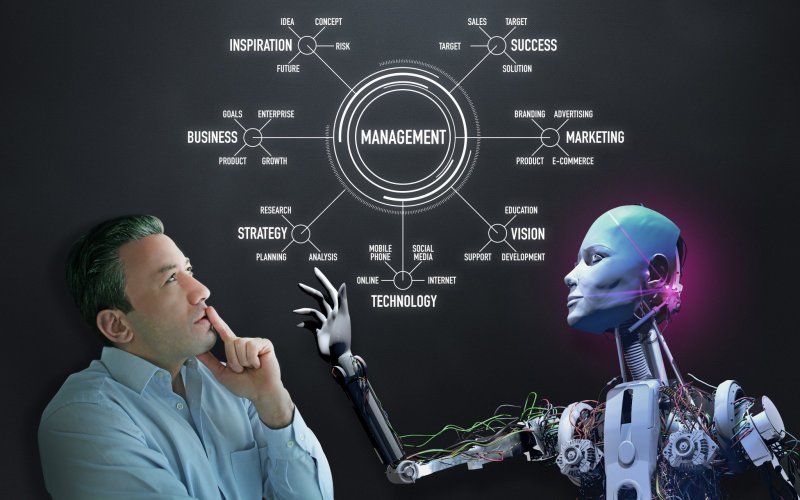
How are you leveraging AI to differentiate your business?
By Rick Lochner • September 28, 2026
...so that you can do something about it now”

By Rick Lochner • August 26, 2026
...it’s the product of their interaction.” While we’ve written intermittently about systems and processes, the current VUCA (Volatile, Uncertain, Comple, Ambiguous) business environment compels us to spend more time on how important systems thinking is to effective leadership. We are using the title quote from the late Russell Ackoff , who was a pioneer in the field of operations research, systems thinking and management science. And to illustrate the importance of the title quote, we will use a case study we came across a year ago to drive the point home. The project was a joint venture between General Motors and Toyota named the New United Motor manufacturing, Inc. or NUMMI for short. The goal of the venture was to apply the lessons Toyota learned around lean manufacturing to a failing GM plant in Fremont, California. The results were dramatic in the increased productivity of the plant proving that transformation could occur with fundamentally the same personnel in the plant before and after the switch. While the application of lean methodologies succeeded in producing much improved results, the lessons learned were ultimately lost on GM leadership. They concluded that it was the processes alone that created the change since the personnel were basically the same. In fact, it was the interrelationships between the processes that carried the success of the venture overall. Today, that plant is owned by Tesla. So, what does that mean in a VUCA business environment? It means that leaders trying to react and flex to pieces and parts of the system that are impacted by change will struggle to solve the problem in a sustainable way. It is understanding that volatility and/or complexity, while deeply affecting one particular part of the system, ultimately has systemic impacts across other systems as well. It also means that uncertainty and/or ambiguity will make it difficult to ascertain where the solution lies without looking at the business through the lens of systems thinking. Now, just for the fun of it, let’s throw in the impact of artificial intelligence (AI). The AI impact has come at the business environment with a vengeance to the point where we are already seeing the strategic and systemic challenges encountered by early adopters. In our estimation, it once again looks like business leaders are adopting AI as a workforce replacement instead of addressing where AI fits into the current and desired systems approach to the business. Once again, the absence of being able to see the interrelationships between systems creates major blind spots and lessons not learned similar to the NUMMI and GM venture. From our 2022 book, “ Finding the Missing Piece : The Impact of Effective Communications on sustainable Success”, we define systems thinking as, “...a holistic approach focusing on how a system’s components work together, how a system operates over time as well as how it operates in the context of other larger systems.” The only way systems can provide the foundational value to the organization is through leaders who can fully appreciate and understand its benefits, especially in a VUCA business environment! How are your leadership interactions enhancing the business systems? If you’re not sure, we can help . Lead Well!