
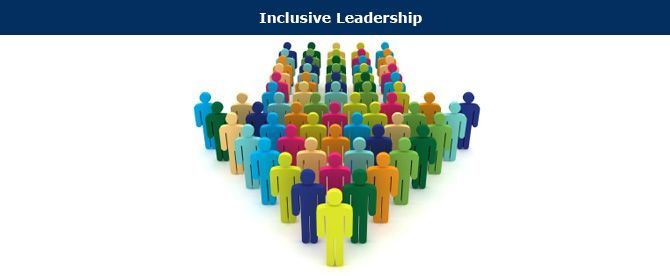
Too much Diversity Training...

August 24, 2020

Share this article:

...not enough Inclusion Development


I had the pleasure recently of delivering our updated Diversity and Inclusion workshop to an audience of Human Resource professionals. We approach diversity and inclusion as a leadership development process as opposed to a program event. Introducing this through the workshop we realized this approach was new to many of the participants. It’s been known for ages that leadership training, while important, does not change attitudes and behaviors in and by itself. Millions of dollars have been spent to develop organizational leaders only to see little or no return because it was merely training disguised as development.


In a simple formula we use in our coaching practice, we discuss the moving parts of leadership development; Skills, Knowledge and Attitude. We define skill as what to do and how to do something relevant to the job. For leaders, skills (hard and soft skills) such as how to set and achieve goals and how to listen are some we regularly encounter. Knowledge is knowing when and where to effectively apply these new skills. For leaders, this can only be accomplished in the context of their role as a leader and repeatedly practiced over time. Attitude is the want, or desire, to leverage the skills and knowledge to advance the organization. Without the want, the how, what, when and where doesn’t work well!


It is also one of the key reasons why the business community still struggles with inclusion. Many would proudly hold up their diversity training programs as evidence their leaders are doing the right thing. However, history tells us the hard truth that a one-hour workshop done once a year (maybe twice if an event happens) on the importance of diversity did nothing to improve the overall attitudes towards diversity. Unfortunately, most of the training workshops did little to speak of the real issue, that of inclusion. I recently responded to a LinkedIn post where one of the posts stated senior leaders are afraid of diversity. My reply was they were not afraid of diversity, they are afraid of inclusion!


There is a Verna Miles quote that aptly explains the difference between diversity and inclusion that goes, “Diversity is getting asked to the party. Inclusion is being asked to dance.” So, if inclusion is the desired end result, how do leaders develop the right attitudes towards inclusion to create an inclusive culture? The answer is simple, get serious about developing the leader’s attitudes around inclusiveness by rethinking the challenge as an event and reframe it as a process. Without an attitude of inclusion, the organization stews in the status quo of its own comfort zone!


We train skills and develop attitudes. We define attitude as one’s habit of thought which means leaders have a choice of how to think about inclusion. Research suggests the strength of the attitude-behavior connection lies in how strongly a person relates to the new attitude. Because every leader is a product of their past, the challenge is helping leaders understand the importance of inclusion that transcends their past programming. This can only be done through an effective leadership development process where inclusion, among other leadership skills, knowledge and attitudes are reinforced in the context of the organizational environment and culture.


Why do we care? In her 2016 book, “Which Two Heads are Better Than One? How Diverse Teams Create Breakthrough Ideas and Make Smarter Decisions”, Juliet Bourke highlights the potential impact of an inclusive organizational culture. Organizations with inclusive cultures are twice as likely to meet and exceed financial goals and six times more innovative and agile. Especially in these challenging times, what organization couldn’t benefit from those multiples?


How are you developing your inclusive culture? If you don’t know, we can help!


Lead Well!

Follow Us:

Our Latest Insights

By Rick Lochner • October 26, 2026
...by its resiliency in uncertainty”
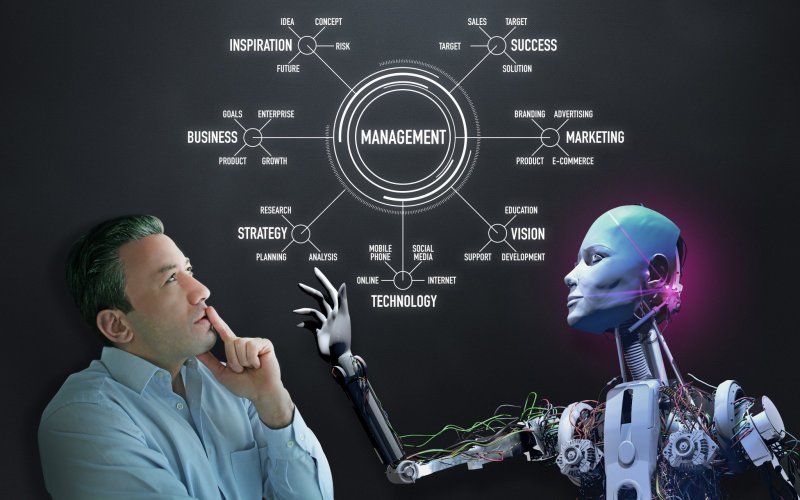
How are you leveraging AI to differentiate your business?
By Rick Lochner • September 28, 2026
...so that you can do something about it now”

By Rick Lochner • August 26, 2026
...it’s the product of their interaction.” While we’ve written intermittently about systems and processes, the current VUCA (Volatile, Uncertain, Comple, Ambiguous) business environment compels us to spend more time on how important systems thinking is to effective leadership. We are using the title quote from the late Russell Ackoff , who was a pioneer in the field of operations research, systems thinking and management science. And to illustrate the importance of the title quote, we will use a case study we came across a year ago to drive the point home. The project was a joint venture between General Motors and Toyota named the New United Motor manufacturing, Inc. or NUMMI for short. The goal of the venture was to apply the lessons Toyota learned around lean manufacturing to a failing GM plant in Fremont, California. The results were dramatic in the increased productivity of the plant proving that transformation could occur with fundamentally the same personnel in the plant before and after the switch. While the application of lean methodologies succeeded in producing much improved results, the lessons learned were ultimately lost on GM leadership. They concluded that it was the processes alone that created the change since the personnel were basically the same. In fact, it was the interrelationships between the processes that carried the success of the venture overall. Today, that plant is owned by Tesla. So, what does that mean in a VUCA business environment? It means that leaders trying to react and flex to pieces and parts of the system that are impacted by change will struggle to solve the problem in a sustainable way. It is understanding that volatility and/or complexity, while deeply affecting one particular part of the system, ultimately has systemic impacts across other systems as well. It also means that uncertainty and/or ambiguity will make it difficult to ascertain where the solution lies without looking at the business through the lens of systems thinking. Now, just for the fun of it, let’s throw in the impact of artificial intelligence (AI). The AI impact has come at the business environment with a vengeance to the point where we are already seeing the strategic and systemic challenges encountered by early adopters. In our estimation, it once again looks like business leaders are adopting AI as a workforce replacement instead of addressing where AI fits into the current and desired systems approach to the business. Once again, the absence of being able to see the interrelationships between systems creates major blind spots and lessons not learned similar to the NUMMI and GM venture. From our 2022 book, “ Finding the Missing Piece : The Impact of Effective Communications on sustainable Success”, we define systems thinking as, “...a holistic approach focusing on how a system’s components work together, how a system operates over time as well as how it operates in the context of other larger systems.” The only way systems can provide the foundational value to the organization is through leaders who can fully appreciate and understand its benefits, especially in a VUCA business environment! How are your leadership interactions enhancing the business systems? If you’re not sure, we can help . Lead Well!