The Past is a Point of Reference…

December 19, 2015

Share this article:

...not a Place of Residence.


“Comfortable”, “Predictable”, “Known” and “Familiar” are all terms we would like to describe our lives as leaders. Or would we? It is easy to rely on the past because it has already happened, something we have already seen and experiences making it familiar to us. The problem is that it is what was and likely not a good reflection of what will be. The question becomes how do we effectively use the past as a learning experience without allowing ourselves to get “stuck” living in it?


  • Using the Past as a Point of Reference ~ We are all products of our past regardless of what that past looked like. It molds us into who we are due to its influence on the beliefs and attitudes that drive our daily actions. The key to learning from our past is to get beyond remembering only what happened in the past, what I call our “Content Past”. We remember events, people and conversations from our past that we file away under “I will want to do more of that” or “I’ll never work with that person again” or any of the thousands of reference points we attach to our past. However, we need to take this a step further and consciously ask ourselves, “What did I learn from this experience?” or what I call our “Contextual Past”. What was the cause and effect of these experiences that help us understand that a failure in the past does not result in a “I will never do that again.” To a more meaningful, “It did not work this time due to the conditions but could work under different conditions.” The reverse is also true and potentially more blinding. A success in the past should not result in, “I will always do it this way going forward.” opposed to a more effective, “It worked under these conditions, but if these conditions change, it might not work as well, or not at all.”


  • Avoiding the Past as a Place of Residence ~ Living in the past, while comforting in the moment, is a dangerous place for leaders and staying relevant in a constantly changing world. The best way to avoid falling into this trap lies in creating and maintaining an Attitude of Adaptability to complement your Purpose. Our behaviors are a reflection of our beliefs and attitudes, which are habits of thought. By embracing adaptability as an inherent element of how we think, we consciously engage in actions that are relevant to current conditions in our life as a leader (personal, business, community, etal). These actions can come across as contrarian and confusing to those who still embrace the status quo (read: most of your followers!) However, it is imperative adaptability as a norm is ingrained into the psyche of the leader and the organizations they lead. In the words of Marshall Goldsmith’s book, “What got you here won't get you there”!


This is the time of year when we typically pause and reflect on the past year and make plans for the upcoming unknown. Our opportunity as leaders is to honestly assess what we learned from our contextual past and, with an open mind, create a future that leverages that new learning for sustainable success!

How will your future look different than your past?


Lead Well!

Follow Us:

Our Latest Insights

By Rick Lochner • October 26, 2026
...by its resiliency in uncertainty”
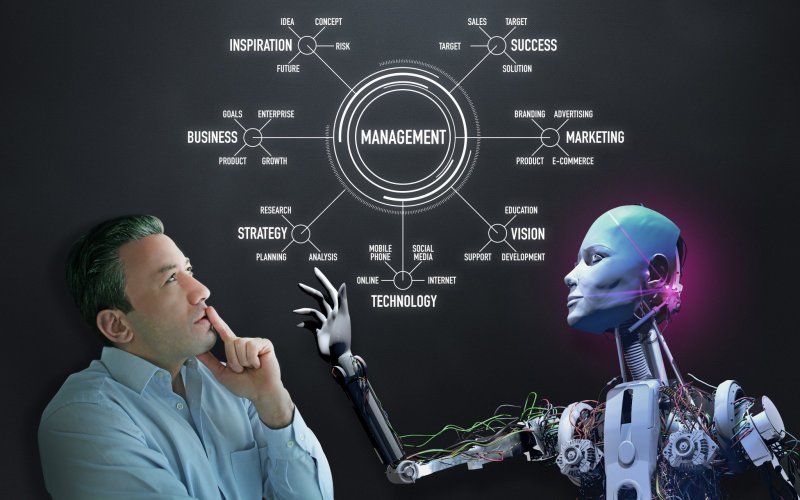
How are you leveraging AI to differentiate your business?
By Rick Lochner • September 28, 2026
...so that you can do something about it now”

By Rick Lochner • August 26, 2026
...it’s the product of their interaction.” While we’ve written intermittently about systems and processes, the current VUCA (Volatile, Uncertain, Comple, Ambiguous) business environment compels us to spend more time on how important systems thinking is to effective leadership. We are using the title quote from the late Russell Ackoff , who was a pioneer in the field of operations research, systems thinking and management science. And to illustrate the importance of the title quote, we will use a case study we came across a year ago to drive the point home. The project was a joint venture between General Motors and Toyota named the New United Motor manufacturing, Inc. or NUMMI for short. The goal of the venture was to apply the lessons Toyota learned around lean manufacturing to a failing GM plant in Fremont, California. The results were dramatic in the increased productivity of the plant proving that transformation could occur with fundamentally the same personnel in the plant before and after the switch. While the application of lean methodologies succeeded in producing much improved results, the lessons learned were ultimately lost on GM leadership. They concluded that it was the processes alone that created the change since the personnel were basically the same. In fact, it was the interrelationships between the processes that carried the success of the venture overall. Today, that plant is owned by Tesla. So, what does that mean in a VUCA business environment? It means that leaders trying to react and flex to pieces and parts of the system that are impacted by change will struggle to solve the problem in a sustainable way. It is understanding that volatility and/or complexity, while deeply affecting one particular part of the system, ultimately has systemic impacts across other systems as well. It also means that uncertainty and/or ambiguity will make it difficult to ascertain where the solution lies without looking at the business through the lens of systems thinking. Now, just for the fun of it, let’s throw in the impact of artificial intelligence (AI). The AI impact has come at the business environment with a vengeance to the point where we are already seeing the strategic and systemic challenges encountered by early adopters. In our estimation, it once again looks like business leaders are adopting AI as a workforce replacement instead of addressing where AI fits into the current and desired systems approach to the business. Once again, the absence of being able to see the interrelationships between systems creates major blind spots and lessons not learned similar to the NUMMI and GM venture. From our 2022 book, “ Finding the Missing Piece : The Impact of Effective Communications on sustainable Success”, we define systems thinking as, “...a holistic approach focusing on how a system’s components work together, how a system operates over time as well as how it operates in the context of other larger systems.” The only way systems can provide the foundational value to the organization is through leaders who can fully appreciate and understand its benefits, especially in a VUCA business environment! How are your leadership interactions enhancing the business systems? If you’re not sure, we can help . Lead Well!