
"...the only thing we have to fear...

March 19, 2020

Share this article:

...is fear itself..."


Franklin Delano Roosevelt spoke these words at the beginning of his inaugural address on March 4, 1933. As I read through the entire inaugural address to understand its full context, it occurred to me he was speaking about Leadership, both his and that of the citizenry of that time. Fast-forward to today and we find the message of effective leadership in uncertain times remains resolute.


What does it mean for leaders to remain resolute and effectively lead in a dynamic and fast changing business environment? In our ongoing work with clients, these are the main themes of focus for effective leadership.


  • Lead with Attitude ~ Effective leaders inherently know that attitude leads behavior. What we think, we do. If leaders think of uncertainty as a crisis, then no matter how hard they try, a certain level of panic will ensue. Effective leaders know that how they show up matters and are consciously aware of how they present themselves in their communications. Another attitude that matters in uncertainty is the mindset of always moving forward. While self-isolation is necessary under current conditions, forward progress does not have to suffer because of it. Effective leaders are always looking to the next move forward, however incremental it may be. When others see this forward movement, it sends a clear signal of trust and confidence in their leadership!
  • Make Decisions ~ Making decisions in uncertain times is risky on a good day! However, decisions must be made to create the forward movement we spoke of in the previous paragraph. Effective decision-making involves several key elements. First and foremost, effective leaders educate themselves from the most reliable sources available. They understand the value of facts from credible sources that provide information around worst case, best case and most likely case scenarios. This provides leaders with objective data sets to make their own contingency plans with a range of options and avoid limiting themselves with worst case subjective data and opinions. Even when assumptions don’t pan out as expected (and they will), effective leaders are quick to recognize and revise the plan to the next decision!
  • Communicate Effectively ~ Aristotle is credited with the saying, “Nature abhors a vacuum.” Business cannot exist in a communications vacuum! Effective communications can only occur when the sender and the receiver understand the message in the same context. Effective leaders know how important it is to communicate the meaning of the information they share in a way that makes it easy to understand so their teams know the right next actions based on their message. We spend quite a bit of time with our clients on effective communications due to its importance to effective leadership. Even simply changes like using active voice versus passive voice or asking clarifying questions give followers a heightened sense of confidence in their leadership!


A recurring theme to this new normal is how effective leadership shows itself when life throws a massive curveball. Faux leaders will crumble and try to manage their way out of risky situations. Effective leaders have the courage to take their positions front and center and lead their teams, organizations, agencies and businesses forward to sustainable success!

How is your leadership helping your team manage fear and uncertainty?


Lead Well!

Follow Us:

Our Latest Insights

By Rick Lochner • October 26, 2026
...by its resiliency in uncertainty”
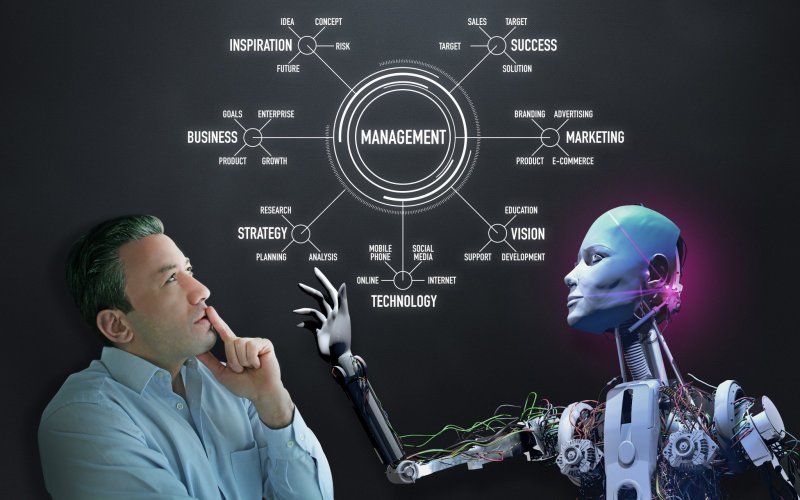
How are you leveraging AI to differentiate your business?
By Rick Lochner • September 28, 2026
...so that you can do something about it now”

By Rick Lochner • August 26, 2026
...it’s the product of their interaction.” While we’ve written intermittently about systems and processes, the current VUCA (Volatile, Uncertain, Comple, Ambiguous) business environment compels us to spend more time on how important systems thinking is to effective leadership. We are using the title quote from the late Russell Ackoff , who was a pioneer in the field of operations research, systems thinking and management science. And to illustrate the importance of the title quote, we will use a case study we came across a year ago to drive the point home. The project was a joint venture between General Motors and Toyota named the New United Motor manufacturing, Inc. or NUMMI for short. The goal of the venture was to apply the lessons Toyota learned around lean manufacturing to a failing GM plant in Fremont, California. The results were dramatic in the increased productivity of the plant proving that transformation could occur with fundamentally the same personnel in the plant before and after the switch. While the application of lean methodologies succeeded in producing much improved results, the lessons learned were ultimately lost on GM leadership. They concluded that it was the processes alone that created the change since the personnel were basically the same. In fact, it was the interrelationships between the processes that carried the success of the venture overall. Today, that plant is owned by Tesla. So, what does that mean in a VUCA business environment? It means that leaders trying to react and flex to pieces and parts of the system that are impacted by change will struggle to solve the problem in a sustainable way. It is understanding that volatility and/or complexity, while deeply affecting one particular part of the system, ultimately has systemic impacts across other systems as well. It also means that uncertainty and/or ambiguity will make it difficult to ascertain where the solution lies without looking at the business through the lens of systems thinking. Now, just for the fun of it, let’s throw in the impact of artificial intelligence (AI). The AI impact has come at the business environment with a vengeance to the point where we are already seeing the strategic and systemic challenges encountered by early adopters. In our estimation, it once again looks like business leaders are adopting AI as a workforce replacement instead of addressing where AI fits into the current and desired systems approach to the business. Once again, the absence of being able to see the interrelationships between systems creates major blind spots and lessons not learned similar to the NUMMI and GM venture. From our 2022 book, “ Finding the Missing Piece : The Impact of Effective Communications on sustainable Success”, we define systems thinking as, “...a holistic approach focusing on how a system’s components work together, how a system operates over time as well as how it operates in the context of other larger systems.” The only way systems can provide the foundational value to the organization is through leaders who can fully appreciate and understand its benefits, especially in a VUCA business environment! How are your leadership interactions enhancing the business systems? If you’re not sure, we can help . Lead Well!