
“That was Then...

July 26, 2021

Share this article:

...This is Now!”


As we continue to work with organizational leaders in both for-profit and non-profit businesses, a common theme has emerged that resonates across them all. This current business cycle is a recalibration to the new reality (not new normal) of the current VUCA (Volatile, Uncertain, Complex, Ambiguous) business environment. The inspiration for the title for this month’s discussion comes from an S.E. Hinton book by the same title published in the early 1970’s. It’s also been a movie (1985) and a song (1986) by The Monkees music group. However, we are using it to drive home a crucial reminder to today’s 21st Century Leaders as they adapt to the current VUCA Business environment.


Specifically, the focus is on the Operational Support Elements that bridge the gap between the Strategic Thinking process that informs organizational direction and the Tactical Execution that produces the desired results for sustainable success. In our “Missing Piece” series of books, the Operational Support Elements comprise the People, Processes, Technology, and Compensation leveraged to create those desired results. The underlying theme as we explore each of these elements individually is in the way leaders approach each element in today’s context versus with yesterday’s understanding.


  • Structure: People ~ If leaders have learned anything from recent events, relative to their people, it’s that it is a worker’s market. Sadly, businesses have given their people lip service far too long when it comes to how they genuinely care for their well-being. That lip service is now exposed as workers are quitting in huge numbers in search of employment (part-time or full-time) and work for employers that truly care. There are many theories on the causes of this current talent shortage. However, the fact remains that if leaders are leading effectively, retaining their talent would be their top priority for the foreseeable future!


  • Structure: Processes ~ A process that worked well when everyone was in the office is likely not going to work as well, if at all, when everyone is now working in the hybrid work environment. One only has to look at current supply chain gaps to realize the impact processes have on sustainable success. It stands to reason that all core processes must be reviewed for effectiveness in the current context. One of the best ways to accomplish this and build teamwork to address the people issue is giving existing associates a voice to improve the processes no longer optimal in the new reality. Because this is the only way we facilitate process improvement for our clients, we see how valuable giving a voice to the people who actually do the work is!


  • Structure: Technology ~ Ah, the blessing and the curse of modern technology! Integrating technology into the operational support structure of the business is no longer an “if” but a “when” problem to solve. Of course, operational technology must enable the effectiveness and efficiencies of the organizations core and supporting processes to realize its full potential. The combination of the existing talent shortage and new hybrid work environment means digitizing operational work becomes an imperative. Regardless of personal preference, video as a mainstream means to effectively communicate is here to stay!


  • Compensation: Monetary ~ It is no secret how the minimum wage discussion has been a hot topic over the past two years. Given the challenges in finding the needed talent, current salary math has changed dramatically as a result. The question we hear often is how the business cannot afford the higher salary expectations from the worker’s market. Our question in response is around the cost of the work not getting done at all. Clearly the financials have to work, and it is here where leaders will also see the value in addressing the three structure elements discussed above. When leaders view what they pay for talent as an investment rather than a cost, increased retention and sustainable success will follow!


  • Compensation: Non-Monetary ~ One of the distinct differences in the workforce in the new reality is the emergence of the value of non-monetary benefits and compensation. The value of flexible work hours may more than offset a higher salary. This is especially true of a workforce that is not totally wed to the full-time, 9 to 5 work schedule. They may be more motivated by individualism, continuous learning or creativity. Leaders must fully understand it is not about directly motivating their team members as much as it is creating the work environment that draws out the full measure of the team’s motivation!


It is human nature to be most comfortable with what we already know. When the status quo no longer works, leaders have an obligation to embrace the new reality and think differently about how sustainable success is achieved in the “Now” versus the “Then”. C. S. Lewis is quoted as saying, “You can’t go back and change the beginning, but you can start where you are and change the ending.”


How will your business cycle end, starting now? If you are not sure, we can help.


Lead Well!

Follow Us:

Our Latest Insights

By Rick Lochner • October 26, 2026
...by its resiliency in uncertainty”
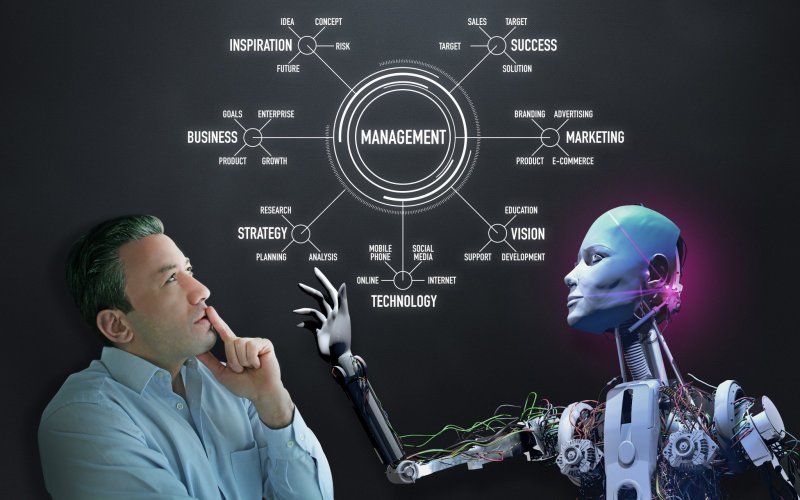
How are you leveraging AI to differentiate your business?
By Rick Lochner • September 28, 2026
...so that you can do something about it now”

By Rick Lochner • August 26, 2026
...it’s the product of their interaction.” While we’ve written intermittently about systems and processes, the current VUCA (Volatile, Uncertain, Comple, Ambiguous) business environment compels us to spend more time on how important systems thinking is to effective leadership. We are using the title quote from the late Russell Ackoff , who was a pioneer in the field of operations research, systems thinking and management science. And to illustrate the importance of the title quote, we will use a case study we came across a year ago to drive the point home. The project was a joint venture between General Motors and Toyota named the New United Motor manufacturing, Inc. or NUMMI for short. The goal of the venture was to apply the lessons Toyota learned around lean manufacturing to a failing GM plant in Fremont, California. The results were dramatic in the increased productivity of the plant proving that transformation could occur with fundamentally the same personnel in the plant before and after the switch. While the application of lean methodologies succeeded in producing much improved results, the lessons learned were ultimately lost on GM leadership. They concluded that it was the processes alone that created the change since the personnel were basically the same. In fact, it was the interrelationships between the processes that carried the success of the venture overall. Today, that plant is owned by Tesla. So, what does that mean in a VUCA business environment? It means that leaders trying to react and flex to pieces and parts of the system that are impacted by change will struggle to solve the problem in a sustainable way. It is understanding that volatility and/or complexity, while deeply affecting one particular part of the system, ultimately has systemic impacts across other systems as well. It also means that uncertainty and/or ambiguity will make it difficult to ascertain where the solution lies without looking at the business through the lens of systems thinking. Now, just for the fun of it, let’s throw in the impact of artificial intelligence (AI). The AI impact has come at the business environment with a vengeance to the point where we are already seeing the strategic and systemic challenges encountered by early adopters. In our estimation, it once again looks like business leaders are adopting AI as a workforce replacement instead of addressing where AI fits into the current and desired systems approach to the business. Once again, the absence of being able to see the interrelationships between systems creates major blind spots and lessons not learned similar to the NUMMI and GM venture. From our 2022 book, “ Finding the Missing Piece : The Impact of Effective Communications on sustainable Success”, we define systems thinking as, “...a holistic approach focusing on how a system’s components work together, how a system operates over time as well as how it operates in the context of other larger systems.” The only way systems can provide the foundational value to the organization is through leaders who can fully appreciate and understand its benefits, especially in a VUCA business environment! How are your leadership interactions enhancing the business systems? If you’re not sure, we can help . Lead Well!