Soft Skills...

June 23, 2019

Share this article:

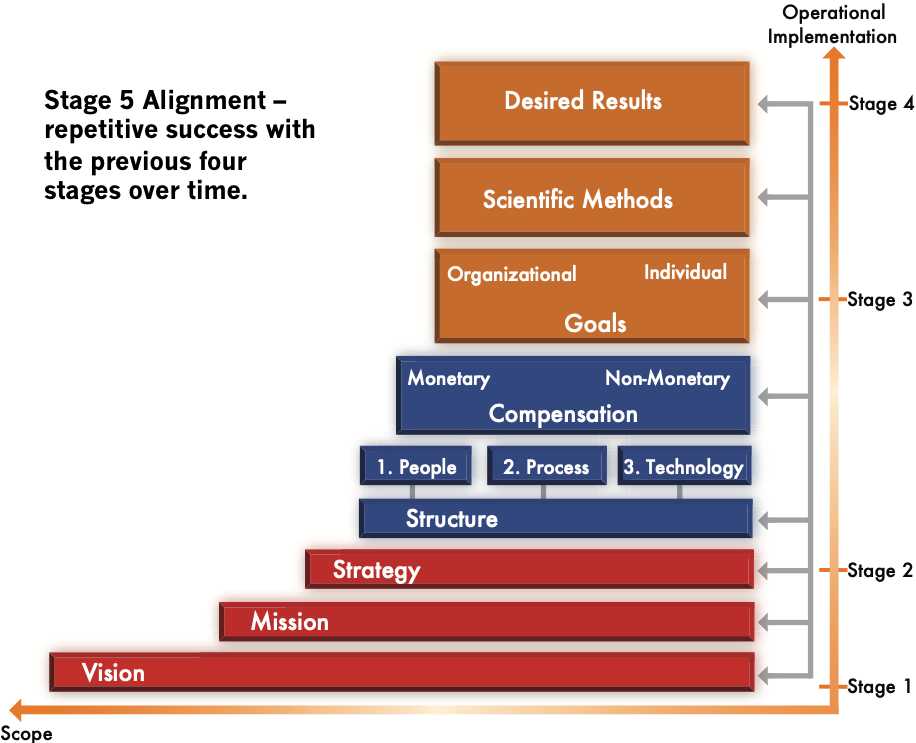
Diagram of a five-stage alignment model with colored stacked bars and labels from vision to desired results.

…are the new Hard Skills.”


Our conversation around the emerging importance of soft skills has, to this point, focused on their impact to the individual leader and in general terms of the impact to the organization which the leader leads. In this issue, we will directly address the importance of soft skills in the context of achieving sustainable organizational success using the Business Alignment Maturity Model© (BAMM) outlined in our “The Missing Piece…” series of books.


As a quick refresher, BAMM is an organizational business model outlining the five stages of business alignment necessary to create sustainable success. Whether you are a small business leader/owner, a leader of a corporate business unit/team or a non-profit leader, your organization must align all its moving parts in order to achieve the desired results – over and over again! So let’s explore how soft skills factor into this sustainable organizational success:


  • Creating a Compelling Vision (Stage 1) ~ The research is clear that organizations with a compelling Vision enjoy greater success than those that don’t. The Vision provides the point on the horizon for the organization to reference for the overall narrative around their purpose and why they, as an organization, do what they do. The soft skills that come into play in a prominent way are Emotional Intelligence, Curiosity and Effective Communications. Visions are primarily emotional and aspirational statements leaders use to rally the organization around a purpose. Therefore, leaders must be able to not only leverage their curiosity to help create a compelling Vision, but to effectively communicate that Vision in a way that transcends the words themselves. As you might imagine, anything that is compelling requires effective communication at a level that touches hearts, minds and souls!
  • Creating a Strategy to Complete (Stage 2) ~ Strategy is simply how the organization plans to compete in their markets/industries/channels. The implications are numerous in creating an effective Strategy including knowing the organization’s strengths and weaknesses as well as the competitive, environmental, technical, political and socio-cultural impacts to its ability to compete effectively. Leaders must be both curious enough to always have a finger on the pulse of their industry as well as having an attitude of adaptability, especially when parts of their planned strategy are not working or when an unexpected opportunity shows up in the market. Whatever strategic decisions leaders make, the ability to effectively communicate the Strategy, or pivots to the original Strategy, must be a non-negotiable strength so the Strategy can succeed!
  • Creating Goals that align to the Strategy (Stage 3) ~ This is the stage where leaders make or break their ability to execute. The most compelling Vision and Strategy aren’t worth the time and effort if the organization cannot execute against them. This is where the alignment of Goals is crucial to sustainable success. The effectiveness of a leader’s communications will determine whether the organization’s Goals are aligned towards the Strategy or possibly aligned against the Strategy due to misaligned organizational silos within the business. One unit’s goals may be at cross-purposes with another unit’s goals (Sales and Operations for example). Leaders at all levels in the organization must exercise adaptable goals and critical thinking as the fluid nature of 21st Century business unfolds in the achievement of their Strategy!
  • Achieving Desired Results (Stage 4) ~ Anyone can achieve a business result. However, effective execution means the Desired Results were achieved to achieve the level of growth needed to stay relevant in the specific industry or market. With this subtle, yet critical difference in mind, it is important for leaders to fully exercise critical thinking when looking at the results that are being generated and reported. How are the results being generated? What is the context behind the information being presented to the leader? What is not being reported that needs to be? These, and others, are questions effective leaders know well and are comfortable leveraging in the critical thinking, and subsequent communications, process to achieve Desired Results!
  • Creating a Culture of Alignment (Stage 5) ~ The first four stages of business alignment encompass the eight layers of the Business Alignment Maturity Model© within a stand-alone business cycle. Stage 5 Business Alignment is achieved when the previous four stages can be achieved as a function of the culture with significant senior leadership oversight. Critical to achieving this stage of business alignment is whether the culture allows for the soft skills above to play out naturally. For instance, does the culture somehow inhibit critical thinking through squashing bad news or laisse-faire leadership. Or is constructive conflict encouraged with open dialog on key issues and effective bottom-up communications and listening. The answer will largely determine whether culture allows soft skills to be a competitive edge!


Whether an entrepreneurial leader/small business owner, a leader of a larger corporate team or a non-profit leader, business alignment matters to the sustainable success of the business. To the extent soft skills are leveraged effectively within the organization, they will make the difference between success at an isolated level or sustainable success as a complete organization!


What soft skills are giving your business a competitive edge?


Lead Well!

Follow Us:

Our Latest Insights

By Rick Lochner • October 26, 2026
...by its resiliency in uncertainty”
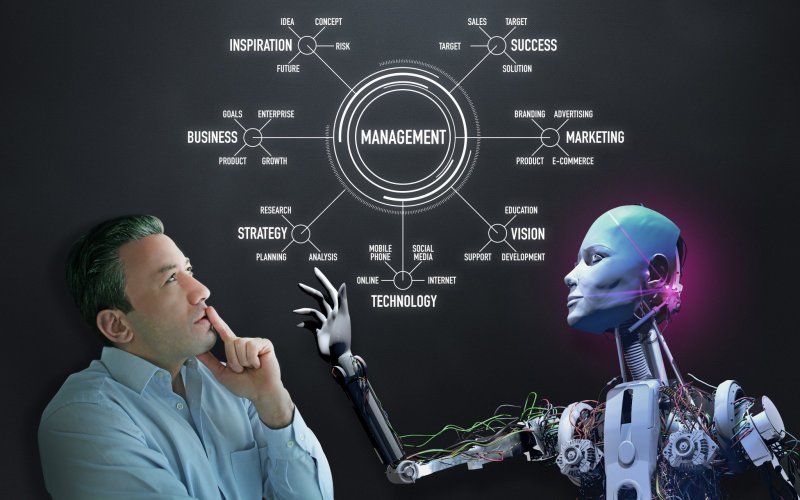
How are you leveraging AI to differentiate your business?
By Rick Lochner • September 28, 2026
...so that you can do something about it now”

By Rick Lochner • August 26, 2026
...it’s the product of their interaction.” While we’ve written intermittently about systems and processes, the current VUCA (Volatile, Uncertain, Comple, Ambiguous) business environment compels us to spend more time on how important systems thinking is to effective leadership. We are using the title quote from the late Russell Ackoff , who was a pioneer in the field of operations research, systems thinking and management science. And to illustrate the importance of the title quote, we will use a case study we came across a year ago to drive the point home. The project was a joint venture between General Motors and Toyota named the New United Motor manufacturing, Inc. or NUMMI for short. The goal of the venture was to apply the lessons Toyota learned around lean manufacturing to a failing GM plant in Fremont, California. The results were dramatic in the increased productivity of the plant proving that transformation could occur with fundamentally the same personnel in the plant before and after the switch. While the application of lean methodologies succeeded in producing much improved results, the lessons learned were ultimately lost on GM leadership. They concluded that it was the processes alone that created the change since the personnel were basically the same. In fact, it was the interrelationships between the processes that carried the success of the venture overall. Today, that plant is owned by Tesla. So, what does that mean in a VUCA business environment? It means that leaders trying to react and flex to pieces and parts of the system that are impacted by change will struggle to solve the problem in a sustainable way. It is understanding that volatility and/or complexity, while deeply affecting one particular part of the system, ultimately has systemic impacts across other systems as well. It also means that uncertainty and/or ambiguity will make it difficult to ascertain where the solution lies without looking at the business through the lens of systems thinking. Now, just for the fun of it, let’s throw in the impact of artificial intelligence (AI). The AI impact has come at the business environment with a vengeance to the point where we are already seeing the strategic and systemic challenges encountered by early adopters. In our estimation, it once again looks like business leaders are adopting AI as a workforce replacement instead of addressing where AI fits into the current and desired systems approach to the business. Once again, the absence of being able to see the interrelationships between systems creates major blind spots and lessons not learned similar to the NUMMI and GM venture. From our 2022 book, “ Finding the Missing Piece : The Impact of Effective Communications on sustainable Success”, we define systems thinking as, “...a holistic approach focusing on how a system’s components work together, how a system operates over time as well as how it operates in the context of other larger systems.” The only way systems can provide the foundational value to the organization is through leaders who can fully appreciate and understand its benefits, especially in a VUCA business environment! How are your leadership interactions enhancing the business systems? If you’re not sure, we can help . Lead Well!