So what if none of the candidates are leaders…

October 25, 2016

Share this article:

As a leadership coach, I have searched high and low to find a definition of leadership that fits what we are seeing on the national election stage. Since I cannot, I stand by the inference in the title which I am sure some will disagree. I also reference a recent Gallup Poll rating the candidates lowest in Inspiring, Caring for Individuals and Visionary in that order. Given these are also traits the nation is looking for in their next leader further supports the assertion. However, what bugs me more is the narrative around hopelessness and helplessness coming from the candidates’ supporters. Really! Is all really lost because of one person?


I’ve certainly been in many situations throughout my career where my direct supervisor, whether they be a front-line manager or CEO, who would not win “Boss-of-the-year”. I can also never remember a time where I used my supervisor’s weaknesses as an excuse to act hopeless or helpless. When you think about it, nothing changes by blaming your present situation on someone else. As the expression goes, “Being resentful is like drinking poison and waiting for the other person to die.” So what can we do to ensure our own motivation stays properly focused in light of poor leadership around us?


  • Understand your own motivations ~ I often hear from clients, “My manager does not motivate me”, mostly in the context of why they are under-performing in their job. My reply is always along the lines of how that is not the manager’s job. They are absolutely responsible for training, inspiring, empathizing and otherwise providing a culture of success. But only you can motivate you! Knowing your motivators goes a long way to staying focused in the face of distractions.


  • Actively manage your goals ~ Being motivated is one thing, having goals to focus your motivation is required to turn the want into desired outcomes. The absence of goals makes it far too easy to fall into the mindset of looking to blame others for lack of progress, either professionally or personally. The next president, governor or mayor will have very little direct impact on my ability to achieve my goals for the next year and beyond!


  • Play to win versus playing not to lose ~ How many times have you been in a conversation about what others want to achieve and most of the answers are what they don’t want to do? This is a sure sign of playing not to lose. When you focus on defending against what others are doing then you essentially put yourself at their mercy. Decide what you want to do to win (achieve goals) and set out to do just that. What others do, regardless of their position, may cause a course-correction and only rarely might it cause you to change your goal altogether. Focus on playing to win!


I’ve long believed that effective leadership is about leading yourself as much as it is about leading others. Leading yourself begins with an attitude of action supported by affirmations of success. It includes exercising your responsibilities of citizenship to their fullest, setting the example for others.

In challenging times where effective leadership is scarce, what self-leadership example are you setting for others?


Lead Well!

Follow Us:

Our Latest Insights

By Rick Lochner • October 26, 2026
...by its resiliency in uncertainty”
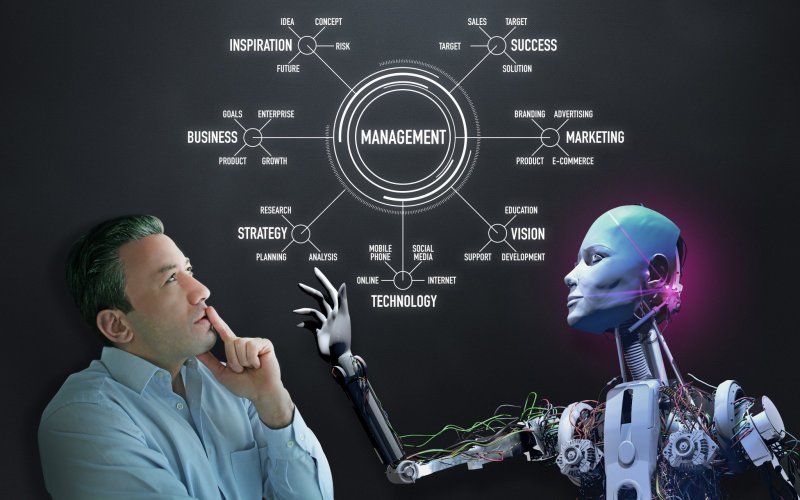
How are you leveraging AI to differentiate your business?
By Rick Lochner • September 28, 2026
...so that you can do something about it now”

By Rick Lochner • August 26, 2026
...it’s the product of their interaction.” While we’ve written intermittently about systems and processes, the current VUCA (Volatile, Uncertain, Comple, Ambiguous) business environment compels us to spend more time on how important systems thinking is to effective leadership. We are using the title quote from the late Russell Ackoff , who was a pioneer in the field of operations research, systems thinking and management science. And to illustrate the importance of the title quote, we will use a case study we came across a year ago to drive the point home. The project was a joint venture between General Motors and Toyota named the New United Motor manufacturing, Inc. or NUMMI for short. The goal of the venture was to apply the lessons Toyota learned around lean manufacturing to a failing GM plant in Fremont, California. The results were dramatic in the increased productivity of the plant proving that transformation could occur with fundamentally the same personnel in the plant before and after the switch. While the application of lean methodologies succeeded in producing much improved results, the lessons learned were ultimately lost on GM leadership. They concluded that it was the processes alone that created the change since the personnel were basically the same. In fact, it was the interrelationships between the processes that carried the success of the venture overall. Today, that plant is owned by Tesla. So, what does that mean in a VUCA business environment? It means that leaders trying to react and flex to pieces and parts of the system that are impacted by change will struggle to solve the problem in a sustainable way. It is understanding that volatility and/or complexity, while deeply affecting one particular part of the system, ultimately has systemic impacts across other systems as well. It also means that uncertainty and/or ambiguity will make it difficult to ascertain where the solution lies without looking at the business through the lens of systems thinking. Now, just for the fun of it, let’s throw in the impact of artificial intelligence (AI). The AI impact has come at the business environment with a vengeance to the point where we are already seeing the strategic and systemic challenges encountered by early adopters. In our estimation, it once again looks like business leaders are adopting AI as a workforce replacement instead of addressing where AI fits into the current and desired systems approach to the business. Once again, the absence of being able to see the interrelationships between systems creates major blind spots and lessons not learned similar to the NUMMI and GM venture. From our 2022 book, “ Finding the Missing Piece : The Impact of Effective Communications on sustainable Success”, we define systems thinking as, “...a holistic approach focusing on how a system’s components work together, how a system operates over time as well as how it operates in the context of other larger systems.” The only way systems can provide the foundational value to the organization is through leaders who can fully appreciate and understand its benefits, especially in a VUCA business environment! How are your leadership interactions enhancing the business systems? If you’re not sure, we can help . Lead Well!