Making Leadership a Way of Life!

October 2, 2018

Share this article:

The title of this month’s conversation also happens to be the Vision for RPC Leadership Associates, Inc. As we celebrated our ten-year anniversary in September, it seems only appropriate to reflect on how our Vision has inspired and affirmed everything we achieved and what it has meant to our business these last 10 years.


To set the stage for how it all started, one of the prevailing issues I saw throughout my military and corporate career was just how few leaders there are in business, politics, religion, sports and any other category of work you want to add. Of course, by leadership I mean those who are leaders versus those who carry the title or just “do” leadership. And so, it has been a personal crusade to support those who strive to be leaders to their core, to the point they don't know any other way; it’s now a way of life!


What does it mean to make leadership a way of life? Here are a few things we’ve learned over the last ten years through the process of supporting a diverse client base during that time:


  • Attitude Matters! ~ Over the years, I’ve half-jokingly told people who ask what we do that we are in the “attitude adjustment” business. I do say it half-jokingly because having the right attitude is critical to effective lifelong leadership. The trick to natural leadership lies in the way one thinks about what leadership really is and how that person goes about aligning their behavior to that thinking. Is it a way to be or is it a job? Is it about serving others or others serving them? Do they believe they can be successful without the team or is the leader’s success permanently tied to the team’s success? These are but a few of the mindsets that drive effective lifelong leadership. At the same time, these leaders have an attitude of success so strong they have a clear vision of a future for their team or organization. Making leadership a way of life is hard and many times risky and yet, when done right, is one of the most rewarding roles anyone can have!
  • The Upside to Being Stuck! ~ At the rate of change in business today, the likelihood that a business will get stuck at some point is pretty good. The challenge for leaders is how they address the situation by changing how they operate and adapt to the changing situation before the situation forces them to change in a way they would not have otherwise done. The way we see it, getting stuck is a sign that what once worked, isn't working now and change is needed. In many cases, leaders know this, but what they don’t know is how to change in a way that is going to put their organization back on a growth path. Over the years, our experience has been that merely asking the questions leaders had not thought of or were afraid to ask (don’t ask the question if you don't want the answer) it. However, once asked and processed, the answers shed light on new ways of thinking such that they can refocus on new ideas with enough discipline to block the distractions of change!
  • Leadership is a Team Sport! ~ Leaders are not leaders if they don't have followers. Effective lifelong leadership occurs because the leader built a team they trust and who can carry out the Vision of the organization without being micromanaged. Effectively leaders also understand the value of accountability, not just by the followers to the leader, but the followers to the other followers and the leader to the followers. Every team wants to be led well, a mantra that I repeat as often as I can as a reminder that it’s all about the team. A micromanager might achieve results in a single business cycle but won’t be able to sustain those results. Eventually, the high performers on the team will leave and find work where their talents are appreciated. This is why an attitude of serving the team versus the team serving the leader matters greatly in making leadership a way of life!


Sustainable success comes from leaders who are leaders in their being and not from leaders who are in title only. I’ve often stated that the best way to become a better leader is to become a better person and lead naturally! This is what our Vision promotes and it is what motivates us each and every day to wake up and support the next leader who might be stuck without a clear direction for their organization, who is struggling with process improvement to help their people be more productive or who needs support to develop the next level of leaders to accommodate the growth of the organization. Whatever the case, we look forward to being there for another ten years helping you make leadership a way of life!


How does your Vision prepare you for sustainable success?


Lead Well!

Follow Us:

Our Latest Insights

By Rick Lochner • October 26, 2026
...by its resiliency in uncertainty”
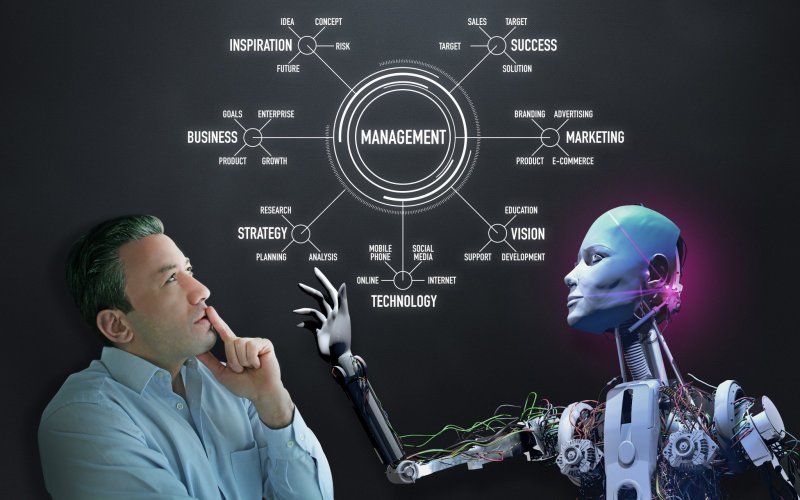
How are you leveraging AI to differentiate your business?
By Rick Lochner • September 28, 2026
...so that you can do something about it now”

By Rick Lochner • August 26, 2026
...it’s the product of their interaction.” While we’ve written intermittently about systems and processes, the current VUCA (Volatile, Uncertain, Comple, Ambiguous) business environment compels us to spend more time on how important systems thinking is to effective leadership. We are using the title quote from the late Russell Ackoff , who was a pioneer in the field of operations research, systems thinking and management science. And to illustrate the importance of the title quote, we will use a case study we came across a year ago to drive the point home. The project was a joint venture between General Motors and Toyota named the New United Motor manufacturing, Inc. or NUMMI for short. The goal of the venture was to apply the lessons Toyota learned around lean manufacturing to a failing GM plant in Fremont, California. The results were dramatic in the increased productivity of the plant proving that transformation could occur with fundamentally the same personnel in the plant before and after the switch. While the application of lean methodologies succeeded in producing much improved results, the lessons learned were ultimately lost on GM leadership. They concluded that it was the processes alone that created the change since the personnel were basically the same. In fact, it was the interrelationships between the processes that carried the success of the venture overall. Today, that plant is owned by Tesla. So, what does that mean in a VUCA business environment? It means that leaders trying to react and flex to pieces and parts of the system that are impacted by change will struggle to solve the problem in a sustainable way. It is understanding that volatility and/or complexity, while deeply affecting one particular part of the system, ultimately has systemic impacts across other systems as well. It also means that uncertainty and/or ambiguity will make it difficult to ascertain where the solution lies without looking at the business through the lens of systems thinking. Now, just for the fun of it, let’s throw in the impact of artificial intelligence (AI). The AI impact has come at the business environment with a vengeance to the point where we are already seeing the strategic and systemic challenges encountered by early adopters. In our estimation, it once again looks like business leaders are adopting AI as a workforce replacement instead of addressing where AI fits into the current and desired systems approach to the business. Once again, the absence of being able to see the interrelationships between systems creates major blind spots and lessons not learned similar to the NUMMI and GM venture. From our 2022 book, “ Finding the Missing Piece : The Impact of Effective Communications on sustainable Success”, we define systems thinking as, “...a holistic approach focusing on how a system’s components work together, how a system operates over time as well as how it operates in the context of other larger systems.” The only way systems can provide the foundational value to the organization is through leaders who can fully appreciate and understand its benefits, especially in a VUCA business environment! How are your leadership interactions enhancing the business systems? If you’re not sure, we can help . Lead Well!