

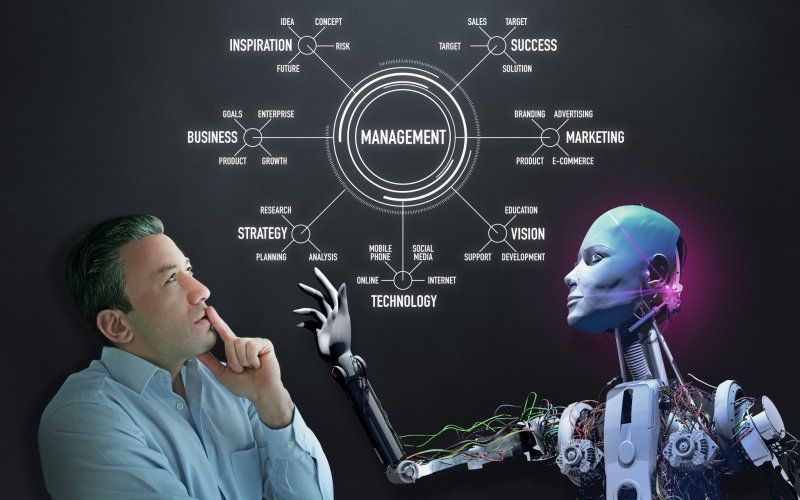
“Knowing is Not Enough. We Must Apply

January 25, 2022

Share this article:

What is your team's motivation to follow you this year?

...Willing is Not Enough. We Must Do”


Ah, the beginning of a new year with new possibilities, opportunities, and challenges for business leaders! It is a time of year where knowledge and intentions run high based on newly minted business plans, sales goals, and growth objectives. Such high expectations leaders have for their teams and businesses before the reality of the VUCA (Volatile, Uncertain, Complex, Ambiguous) business environment sets in. Presumably, the impact of VUCA was baked into the business planning, sales goal planning and growth objective planning. But as Johann Wolfgang von Goethe’s title quote reminds us, planning is just the beginning of achieving desired results. It is through action and application that desired results are truly achieved!


So, what is it that gets leaders and their teams beyond the knowing and intending to achieve desired results? What is their motivation? Actually, the second question is a large part of the answer to the first question. Motivation is often misunderstood and subsequently misused in the leadership context. We often hear from clients that their leader, “...does not motivate them.” Or we hear from leaders how frustrated they are not being able to, “...motivate their teams.” In both cases, we must set the record straight. The only person that can motivate any person, is that person!


You see, motivation is an inner drive of the individual to perform their work. It is further broken down into the three components of direction, intensity, and persistence. That is not to say leaders don’t play a role in their follower’s motivation. Leaders are responsible for inspiring, training and equipping and otherwise ensuring followers are set up for success. We summarize it with our clients as, “Create a game worth playing so they willingly come to play the whole game well through to the final whistle” to play off the sports analogy.


Let’s explore each of the three components in more detail through the lens of beginning a new business year!


  • Direction – Clearly having everyone motivated to work within the direction of the business is ideal. This is usually the case when the general direction of the business remains constant year over year. However, in a VUCA business environment, that is impractical. With a strategy that may change direction, even by a few degrees from the previous year, changing ones’ motivational direction will be challenged. Leaders must recognize this shift and give the time for the collective motivation to align to the strategy!
  • Intensity – Another key element of motivation is the level of engagement it produces. One can be motivated in the right direction but if intensity of engagement is let’s say 60% of potential, the team will struggle ultimately impacting the business. Leaders must recognize when engagement falls off driven by current challenges with a hybrid work environment and the impact of the great resignation to name a few. Knowing what fully motivates each member of the team allows the team to thrive regardless of the obstacles!
  • Persistence – like the dreaded new year’s resolutions that die out after only a few months, motivation needs to persist through the entire business cycle to achieve desired results. The reality of today’s workforce is many are tired, anxious, and burning out in their current roles. Leaders who are fully aware of the importance of persistence know that sustainable success is a marathon versus a sprint. Finding a level of persistence that allows team members to address their ability to engage in a way that preserves personal well-being and aligns with the pace of the business highlights the leader’s ability to create the “game worth playing to the final whistle”!


As we launch into the new year with all its possibilities, leaders must understand and act on the level of motivation and engagement required to achieve desired results. One of the tools we leverage with our clients is to investigate their motivators using the Values Index based on the research of Drs. Eduard Spranger and Gordon Allport. Their research identifies the areas leaders can leverage to optimize their own and their team’s performance based on their key motivations and minimizing their potential de-motivators. This is just one of many resources leaders have at their disposal to create a game worth playing!


What is your team's motivation to follow you this year? If you don't know, we can help.


Lead Well!

Follow Us:

Our Latest Insights

How are you leveraging AI to differentiate your business?
By Rick Lochner • September 28, 2026
...so that you can do something about it now”

By Rick Lochner • August 26, 2026
...it’s the product of their interaction.” While we’ve written intermittently about systems and processes, the current VUCA (Volatile, Uncertain, Comple, Ambiguous) business environment compels us to spend more time on how important systems thinking is to effective leadership. We are using the title quote from the late Russell Ackoff , who was a pioneer in the field of operations research, systems thinking and management science. And to illustrate the importance of the title quote, we will use a case study we came across a year ago to drive the point home. The project was a joint venture between General Motors and Toyota named the New United Motor manufacturing, Inc. or NUMMI for short. The goal of the venture was to apply the lessons Toyota learned around lean manufacturing to a failing GM plant in Fremont, California. The results were dramatic in the increased productivity of the plant proving that transformation could occur with fundamentally the same personnel in the plant before and after the switch. While the application of lean methodologies succeeded in producing much improved results, the lessons learned were ultimately lost on GM leadership. They concluded that it was the processes alone that created the change since the personnel were basically the same. In fact, it was the interrelationships between the processes that carried the success of the venture overall. Today, that plant is owned by Tesla. So, what does that mean in a VUCA business environment? It means that leaders trying to react and flex to pieces and parts of the system that are impacted by change will struggle to solve the problem in a sustainable way. It is understanding that volatility and/or complexity, while deeply affecting one particular part of the system, ultimately has systemic impacts across other systems as well. It also means that uncertainty and/or ambiguity will make it difficult to ascertain where the solution lies without looking at the business through the lens of systems thinking. Now, just for the fun of it, let’s throw in the impact of artificial intelligence (AI). The AI impact has come at the business environment with a vengeance to the point where we are already seeing the strategic and systemic challenges encountered by early adopters. In our estimation, it once again looks like business leaders are adopting AI as a workforce replacement instead of addressing where AI fits into the current and desired systems approach to the business. Once again, the absence of being able to see the interrelationships between systems creates major blind spots and lessons not learned similar to the NUMMI and GM venture. From our 2022 book, “ Finding the Missing Piece : The Impact of Effective Communications on sustainable Success”, we define systems thinking as, “...a holistic approach focusing on how a system’s components work together, how a system operates over time as well as how it operates in the context of other larger systems.” The only way systems can provide the foundational value to the organization is through leaders who can fully appreciate and understand its benefits, especially in a VUCA business environment! How are your leadership interactions enhancing the business systems? If you’re not sure, we can help . Lead Well!
Green road signs labeled “LEADER” left and “FOLLOWER” right on a pole
By Rick Lochner • July 26, 2026
This is a question every leader of any business (for profit or non-profit) of any size and any industry or market needs to regularly ask themselves. It is a critical question in that it establishes the very reason a leader earns the privilege of being called a leader.