
“Excellence drives Mediocre People away…

May 23, 2016

Share this article:

This is a subtitle for your new post

Handwritten white “LEADERSHIP” with a sketched letter B on a black background

…just as Mediocrity drives the Superstars away” One of the greatest challenges any leader will face is putting the right team together and positioning them to excel and achieve desired results! This is true of businesses large and small, for-profit or non-profit, public or private sector. What I love about the title quote from Jim Hunter’s book, “The World’s Most Powerful Leadership Principle” is the simple truth it represents for leaders to invest in fielding the right team to realize the Vision, execute the Strategy by achieving their Goals leading to the aforementioned Desired Results. However, what is frustrating is how many leaders are not addressing the mediocrity and lamenting the inevitable departure of their best team members. Let’s break down the two issues and address what leaders can do with each one. Excellence drives mediocre people away ~ Of course the first challenge to this issue is defining what excellence means to the organization. This may seem easy at face value as one reviews best practices or operations of market leaders. The biggest challenge I see from my own leadership experience is redefining what excellence means in the current context. What was excellent last year may only be good or average this year. A refined definition of organizational excellence must be created to evolve with the changing business environment. Once this new definition is communicated throughout the organization, the leader’s role is to enforce the new standards of excellence and support those on the team who legitimately want to develop to the new expectations.  Of course, we know not all team members will buy in. When we raised the standard of excellence for our engineering teams at Sprint, many engineers self-selected out and decided on their own to leave the team. These were once excellent engineers who, because they chose not to evolve, became mediocre in the current context. In another example, when a client communicated their new Vision and Strategy for excellence, 65% of the current company left over the next six months. This gave them the opportunity to hire excellent replacements allowing the company to nearly triple in growth since that time! Mediocrity drives superstars away ~ The first challenge I see in this situation is recognizing when teams become mediocre. It is not always easy as leaders are blinded by statements such as, “Jane has been here a long time” or “Chuck is a great person” and other such statements that mask the reality of the situation. Mediocrity doesn't happen overnight. It creeps into the organization until one day they realize their competition has lapped their business because they got enamored with the status quo, one of the surest signs mediocrity has set in. Had we let that happen in the previous engineering example, all of our superstars would have easily left and joined the numerous web start-ups who were throwing mad-money at good engineers at that time. But because we clearly defined what excellence was and looked like, many of the superstar engineers stayed. Hold the team to a high standard and not only will the mediocre people leave, but excellent people will want to work for you The key leadership challenges in this discussion are 1) How do leaders define and refine what excellence means to their teams, while at the same time 2) How do leaders recognize and react to the creep of mediocrity within their teams? The secret is creating an organizational culture that engages the leader AND the team to do both at the same time! What type of people are coming into and/or leaving your organization?


Lead Well!

Follow Us:

Our Latest Insights

How are you leveraging AI to differentiate your business?
By Rick Lochner • September 28, 2026
...so that you can do something about it now”

By Rick Lochner • August 26, 2026
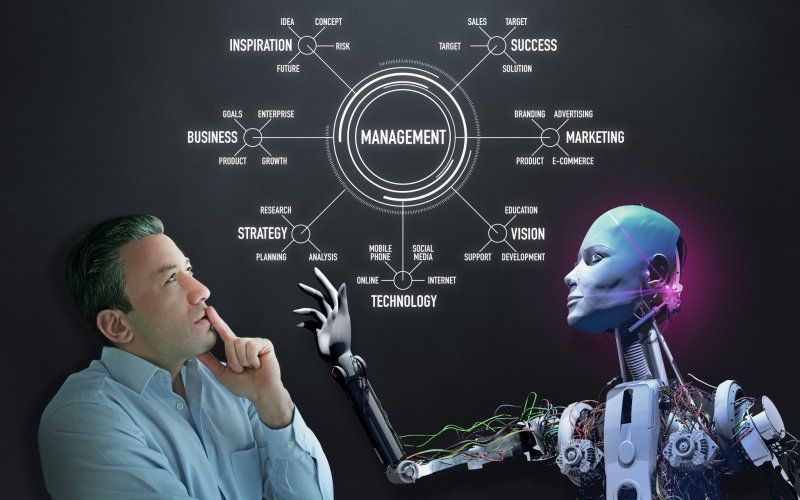
...it’s the product of their interaction.” While we’ve written intermittently about systems and processes, the current VUCA (Volatile, Uncertain, Comple, Ambiguous) business environment compels us to spend more time on how important systems thinking is to effective leadership. We are using the title quote from the late Russell Ackoff , who was a pioneer in the field of operations research, systems thinking and management science. And to illustrate the importance of the title quote, we will use a case study we came across a year ago to drive the point home. The project was a joint venture between General Motors and Toyota named the New United Motor manufacturing, Inc. or NUMMI for short. The goal of the venture was to apply the lessons Toyota learned around lean manufacturing to a failing GM plant in Fremont, California. The results were dramatic in the increased productivity of the plant proving that transformation could occur with fundamentally the same personnel in the plant before and after the switch. While the application of lean methodologies succeeded in producing much improved results, the lessons learned were ultimately lost on GM leadership. They concluded that it was the processes alone that created the change since the personnel were basically the same. In fact, it was the interrelationships between the processes that carried the success of the venture overall. Today, that plant is owned by Tesla. So, what does that mean in a VUCA business environment? It means that leaders trying to react and flex to pieces and parts of the system that are impacted by change will struggle to solve the problem in a sustainable way. It is understanding that volatility and/or complexity, while deeply affecting one particular part of the system, ultimately has systemic impacts across other systems as well. It also means that uncertainty and/or ambiguity will make it difficult to ascertain where the solution lies without looking at the business through the lens of systems thinking. Now, just for the fun of it, let’s throw in the impact of artificial intelligence (AI). The AI impact has come at the business environment with a vengeance to the point where we are already seeing the strategic and systemic challenges encountered by early adopters. In our estimation, it once again looks like business leaders are adopting AI as a workforce replacement instead of addressing where AI fits into the current and desired systems approach to the business. Once again, the absence of being able to see the interrelationships between systems creates major blind spots and lessons not learned similar to the NUMMI and GM venture. From our 2022 book, “ Finding the Missing Piece : The Impact of Effective Communications on sustainable Success”, we define systems thinking as, “...a holistic approach focusing on how a system’s components work together, how a system operates over time as well as how it operates in the context of other larger systems.” The only way systems can provide the foundational value to the organization is through leaders who can fully appreciate and understand its benefits, especially in a VUCA business environment! How are your leadership interactions enhancing the business systems? If you’re not sure, we can help . Lead Well!
Green road signs labeled “LEADER” left and “FOLLOWER” right on a pole
By Rick Lochner • July 26, 2026
This is a question every leader of any business (for profit or non-profit) of any size and any industry or market needs to regularly ask themselves. It is a critical question in that it establishes the very reason a leader earns the privilege of being called a leader.