Change Occurs At The Outer Edge of Your Comfort Zone

October 20, 2012

Share this article:

As we wind down 2012, many of us are reflecting on what we accomplished in 2012 and what changes we will make to continue our successes into 2013. In my own work with small and medium businesses as well as non-profit organizations, managing change is the most common topic of conversation; and why not? The uncertainty that remains in the economic and political environments have leaders in the unenviable position of making the next right strategic decision in the face of all this uncertainty.


How do leaders mitigate this uncertainty enough to make the crucial decisions before them? While there are many moving parts to a successful business strategy, two elements of leading any organization is understanding the general environment you are competing in as well as knowing how your current capabilities match up to that environment. Key to a leader’s strategic thinking process includes a recurring assessment of their general environment against six different factors:


Demographic/Psychographic, Economic, Political/Legal, Socio-Cultural, Technical and Global. Regardless of whether you lead a global organization or do business directly with the government, all six factors will influence your ability to adapt and evolve your business. As I briefly outline each factor below, ask yourself how they impact your business, non-profit or corporation.


  • Demographic/Psychographic ~ we are already seeing debates around the impact of the new census results and the changing demographics of the US population. Psychographics reflect the personalities, values, attitudes and lifestyles of the population.


  • Economic ~ while the recession may be over, businesses generally are still taking a cautious road ahead having a direct impact on the economic recovery. As you assess your own organization’s economic health, how did your supply chain and value chain fare as well?


  • Political/Legal ~ all eyes are on Washington DC these days to gauge the impact of Congress’ decisions and how they influence the current level of cautiousness across the business landscape. How are current federal, state and local budget gaps impacting your organization?


  • Socio-Cultural ~ We see more and more organizations hiring temporary workers, even in management and other predominantly white-collar positions. How “Green” is your organization?


  • Technical ~ an article in the 12/20/10 Wall Street Journal opines how Dr. Seuss would love the e-Readers because they enable children to read more effectively. While technology is changing at a rapid pace, is it effectively advancing the way you conduct your business?


  • Global ~ you may not be a global business, but events around the globe impact your business instantaneously. Have you figured out how and why?


While understanding the general landscape provides today’s leaders with a current view of their external environment, it is only useful if put in the context of their business. The tool most often used for this aspect of the strategic thinking process is the SWOT (Strengths, Weaknesses, Opportunities and Threats) Process. This assessment of the internal environment captures the current capabilities (strengths and weaknesses) and puts them in the context of the external environment (opportunities and threats). While the SWOT is a very versatile tool used to help leaders proactively deal with changes in their business, they must keep in mind it only provides a one-shot view of a moving target and must be used routinely to be effective. Additionally, because we identify an organizational strength through the SWOT process does not mean the strength represents a competitive advantage.


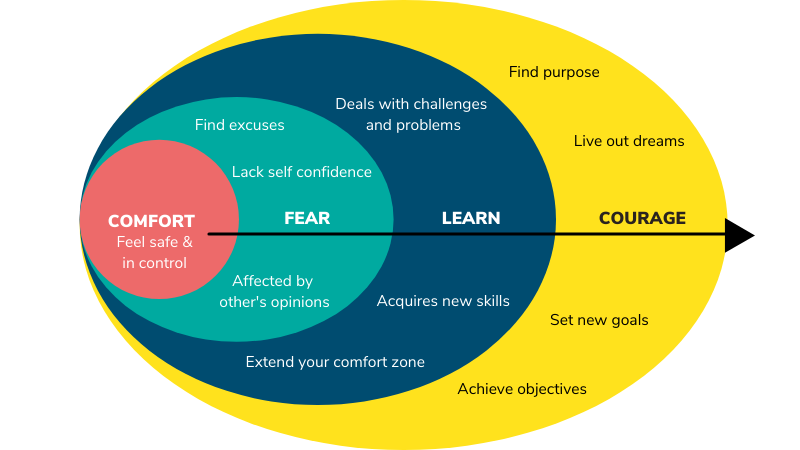
We know change is inevitable, but growth in our business because of the change is not. Leaders must constantly assess which way the winds of change are blowing and adjust their strategy accordingly. I am reminded of the closing scene in The Truman Show when Jim Carrey’s Truman finally makes it to the outer edge of his known world. After a brief dialog, Truman opens the door, literally and figuratively, to a whole new world of possibilities. When you get to the outer edge of your comfort zone, are you prepared to open the door to your new possibilities?


Lead Well!

Follow Us:

Our Latest Insights

By Rick Lochner • October 26, 2026
...by its resiliency in uncertainty”
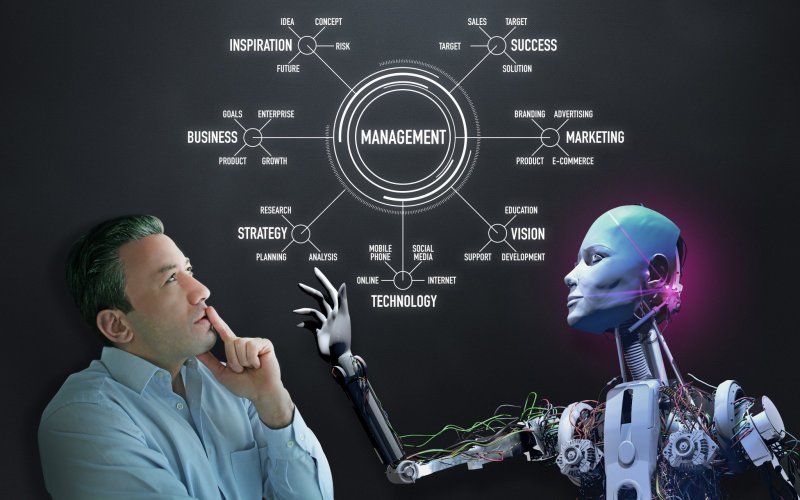
How are you leveraging AI to differentiate your business?
By Rick Lochner • September 28, 2026
...so that you can do something about it now”

By Rick Lochner • August 26, 2026
...it’s the product of their interaction.” While we’ve written intermittently about systems and processes, the current VUCA (Volatile, Uncertain, Comple, Ambiguous) business environment compels us to spend more time on how important systems thinking is to effective leadership. We are using the title quote from the late Russell Ackoff , who was a pioneer in the field of operations research, systems thinking and management science. And to illustrate the importance of the title quote, we will use a case study we came across a year ago to drive the point home. The project was a joint venture between General Motors and Toyota named the New United Motor manufacturing, Inc. or NUMMI for short. The goal of the venture was to apply the lessons Toyota learned around lean manufacturing to a failing GM plant in Fremont, California. The results were dramatic in the increased productivity of the plant proving that transformation could occur with fundamentally the same personnel in the plant before and after the switch. While the application of lean methodologies succeeded in producing much improved results, the lessons learned were ultimately lost on GM leadership. They concluded that it was the processes alone that created the change since the personnel were basically the same. In fact, it was the interrelationships between the processes that carried the success of the venture overall. Today, that plant is owned by Tesla. So, what does that mean in a VUCA business environment? It means that leaders trying to react and flex to pieces and parts of the system that are impacted by change will struggle to solve the problem in a sustainable way. It is understanding that volatility and/or complexity, while deeply affecting one particular part of the system, ultimately has systemic impacts across other systems as well. It also means that uncertainty and/or ambiguity will make it difficult to ascertain where the solution lies without looking at the business through the lens of systems thinking. Now, just for the fun of it, let’s throw in the impact of artificial intelligence (AI). The AI impact has come at the business environment with a vengeance to the point where we are already seeing the strategic and systemic challenges encountered by early adopters. In our estimation, it once again looks like business leaders are adopting AI as a workforce replacement instead of addressing where AI fits into the current and desired systems approach to the business. Once again, the absence of being able to see the interrelationships between systems creates major blind spots and lessons not learned similar to the NUMMI and GM venture. From our 2022 book, “ Finding the Missing Piece : The Impact of Effective Communications on sustainable Success”, we define systems thinking as, “...a holistic approach focusing on how a system’s components work together, how a system operates over time as well as how it operates in the context of other larger systems.” The only way systems can provide the foundational value to the organization is through leaders who can fully appreciate and understand its benefits, especially in a VUCA business environment! How are your leadership interactions enhancing the business systems? If you’re not sure, we can help . Lead Well!