

“Trust is the glue of life.

October 24, 2022

Share this article:

It’s the most essential ingredient in effective communication.”


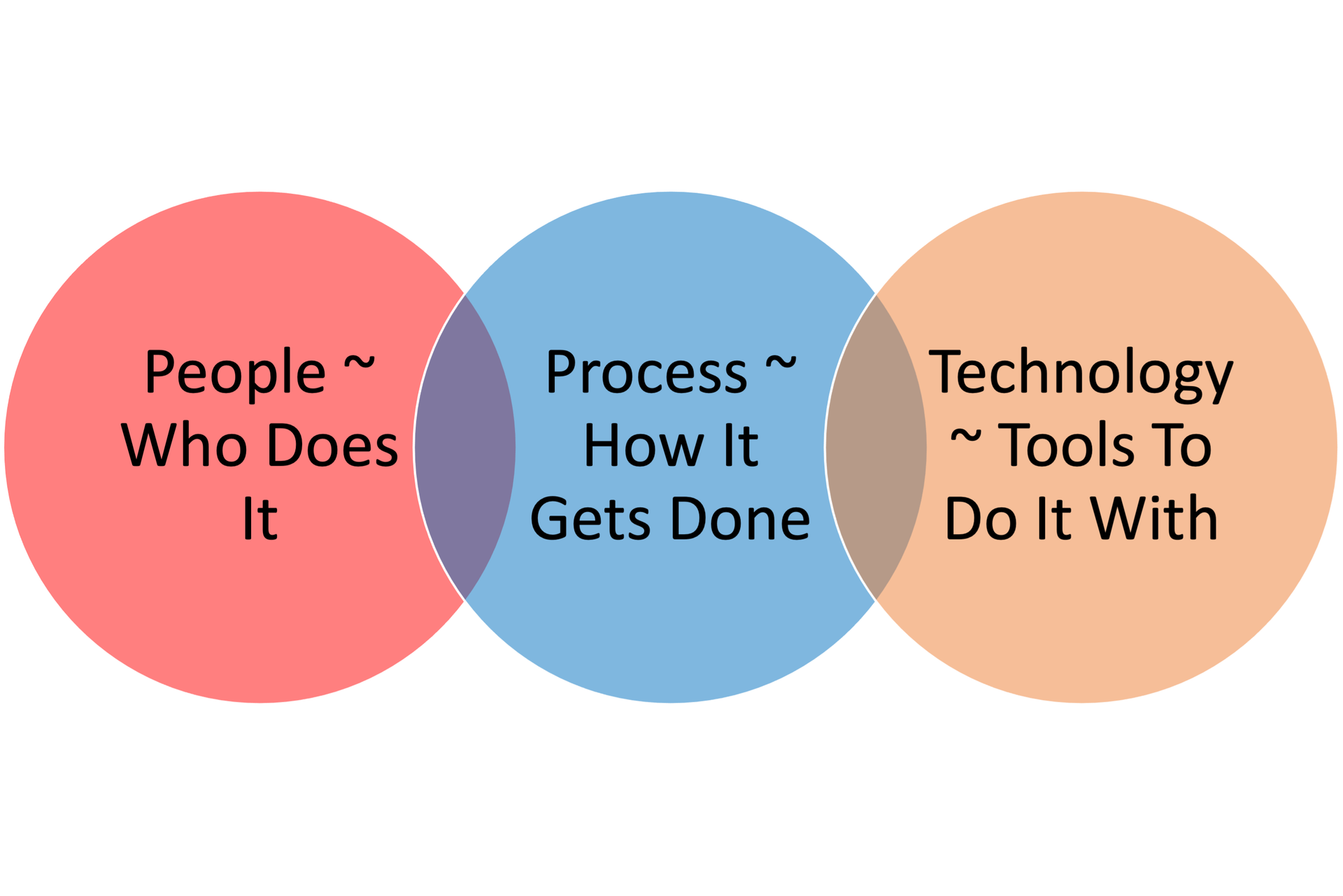
As business leaders start looking at how this year will end and begin planning for the next year, the words of Stephen Covey in the title ring true as leaders develop their new operational plans. Operational planning is comprised of the four guiding elements of the business: People, Process, Technology and Compensation. In Chapters 4 and 5 of our most recent book, “Finding the Missing Piece: The Impact of Effective Communications on Sustainable Success”, we focus on the communications involved in operational planning and why it is critical to the effectiveness of an organization’s overall communication strategy.

Drawing on the definition of business alignment as the process of matching the organization’s tactics to the available or readily acquirable resources to achieve its strategic objectives, we will focus on the available or readily available resources needed to achieve the strategic objectives. In leveraging operational communications, leaders focus on defining the people, processes, systems, milestones and conditions needed to be successful. To that end, operational communications is unique in its application than the strategic communications which we addressed last month and tactical communications which we will address in next month’s blog article.


  • People ~ The most important element of the organizational structure is its people and having the right people in the right seats within the organization. With a new strategy in place, it is important that leaders clearly and concisely communicate the necessary skills, knowledge and attitudes to achieve the new strategy. Additionally, as leaders communicate the necessary attitudes, it is important that the desired behaviors associated with the attitudes are clearly understood. It is important to understand the communications around attitudes and behaviors not only helps the existing workforce evolve to the new strategy, but also supports the organization’s recruiting, hiring, and onboarding processes. Of course, the most important criterion for success lies not only in how leadership communicates these attitudes and behaviors, but models them as well to the rest of the organization!


  • Process ~ Statistically, the W. Edwards Deming Institute estimates that over 90% of the issues in any business are process related! What many leaders are missing is mistaking process issues for people issues and trying to “fix” people when, often it is the processes the people are given to work with that are less than optimal. Effective communications within this structural element rests on two related factors. The first is communicating the flow of the process as it moves horizontally through the organization and vertically within different departments and business units. Of note are communicating the key handoffs that occur between business units where most of the clarity is dropped. The second is the universal understanding of the process language. When everyone involved in the process understands the moving parts and actions the same way, the process can deliver on the promise of desired results!


  • Technology ~ To continue the discussion from the previous paragraph around process, technology plays a crucial role in ensuring the communications from people and process is as efficient and effective as possible, while still being adaptable to changing business conditions. This is achieved through the combination of effective information technology in concert with an effective level of operations technology such that the leader’s intentions, both stated and implied are understood in the context in which they were given. In our business coaching practice, we have found one of the best ways to bring it all together is to engage with those who do the work in the process using the technology in the improvement process. When associates are engaged and included in process improvement and technology enhancement discussions, they not only have a sense of ownership in the outcome, but also become evangelists for the new processes and/or new technology when it launches to the rest of the organization!


  • Compensation ~ The last piece of effective operational communications is Compensation which is further compartmentalized into monetary and non-monetary rewards. This is a direct link to the motivation associated with achieving sustainable success and serves as a reminder to leaders that motivation is not just about money. The discussion around motivation in the context of today’s VUCA (Volatile, Uncertain, Complex, Ambiguous) business environment cannot happen without a discussion of trust. Trust in leader’s communications is based on the level of credibility the leader has in their words, the level of reliability they have in their actions and the level of psychological safety at an emotional level. When leaders’ communication clearly reflects the good of their team over their own personal agendas, then trust will be a positive factor in achieving sustainable and desired results!


These Operational Support Elements are the critical link between the Strategic and Tactical operations of the business alignment process. They must exist in alignment to reduce the friction that naturally occurs between people, processes and systems. For leaders to neglect the importance of these elements is to set their organizations up for less-than-optimal success!


What will your operational narrative sound like for your business leading into the new business year? If you’re not sure, we can help.


Lead Well!

Follow Us:

Our Latest Insights

How are you leveraging AI to differentiate your business?
By Rick Lochner • September 28, 2026
...so that you can do something about it now”

By Rick Lochner • August 26, 2026
...it’s the product of their interaction.” While we’ve written intermittently about systems and processes, the current VUCA (Volatile, Uncertain, Comple, Ambiguous) business environment compels us to spend more time on how important systems thinking is to effective leadership. We are using the title quote from the late Russell Ackoff , who was a pioneer in the field of operations research, systems thinking and management science. And to illustrate the importance of the title quote, we will use a case study we came across a year ago to drive the point home. The project was a joint venture between General Motors and Toyota named the New United Motor manufacturing, Inc. or NUMMI for short. The goal of the venture was to apply the lessons Toyota learned around lean manufacturing to a failing GM plant in Fremont, California. The results were dramatic in the increased productivity of the plant proving that transformation could occur with fundamentally the same personnel in the plant before and after the switch. While the application of lean methodologies succeeded in producing much improved results, the lessons learned were ultimately lost on GM leadership. They concluded that it was the processes alone that created the change since the personnel were basically the same. In fact, it was the interrelationships between the processes that carried the success of the venture overall. Today, that plant is owned by Tesla. So, what does that mean in a VUCA business environment? It means that leaders trying to react and flex to pieces and parts of the system that are impacted by change will struggle to solve the problem in a sustainable way. It is understanding that volatility and/or complexity, while deeply affecting one particular part of the system, ultimately has systemic impacts across other systems as well. It also means that uncertainty and/or ambiguity will make it difficult to ascertain where the solution lies without looking at the business through the lens of systems thinking. Now, just for the fun of it, let’s throw in the impact of artificial intelligence (AI). The AI impact has come at the business environment with a vengeance to the point where we are already seeing the strategic and systemic challenges encountered by early adopters. In our estimation, it once again looks like business leaders are adopting AI as a workforce replacement instead of addressing where AI fits into the current and desired systems approach to the business. Once again, the absence of being able to see the interrelationships between systems creates major blind spots and lessons not learned similar to the NUMMI and GM venture. From our 2022 book, “ Finding the Missing Piece : The Impact of Effective Communications on sustainable Success”, we define systems thinking as, “...a holistic approach focusing on how a system’s components work together, how a system operates over time as well as how it operates in the context of other larger systems.” The only way systems can provide the foundational value to the organization is through leaders who can fully appreciate and understand its benefits, especially in a VUCA business environment! How are your leadership interactions enhancing the business systems? If you’re not sure, we can help . Lead Well!
Green road signs labeled “LEADER” left and “FOLLOWER” right on a pole
By Rick Lochner • July 26, 2026
This is a question every leader of any business (for profit or non-profit) of any size and any industry or market needs to regularly ask themselves. It is a critical question in that it establishes the very reason a leader earns the privilege of being called a leader.