
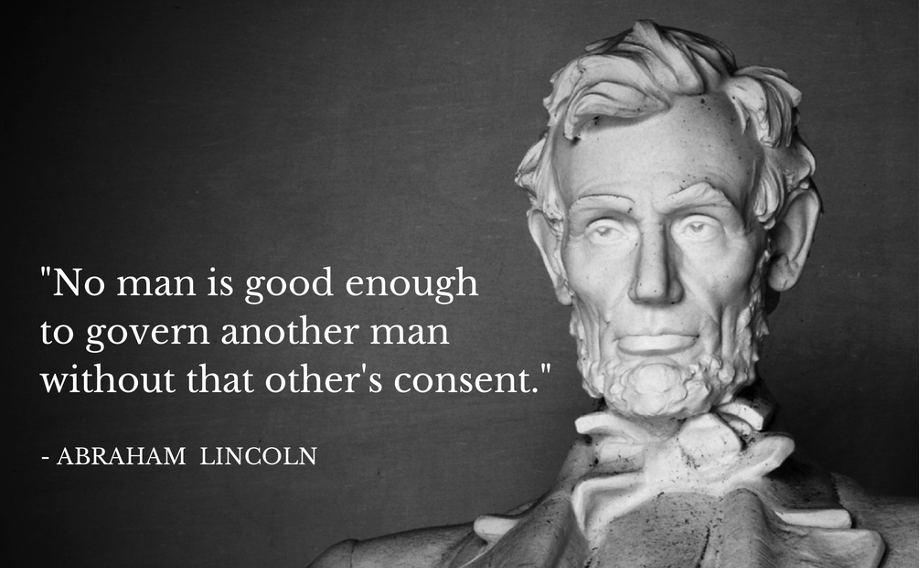

Lead Well!

July 26, 2022

Share this article:

For those who are regular readers of this platform, you might recognize the title of this edition as the way we sign off on all our online posts. I also use it to autograph the books we’ve written over the course of the last ten years. We also reference it in a different way when giving leadership presentations and speeches when we say that, while leadership is complex in so many ways, people ultimately want to be led well! But what do we mean when we say, “Lead Well”?


In a November 2021 article, “7 trends dominating the future of work in 2022”, Korn Ferry talks about 7 key trends that business leaders all need to be focused on. Because we’ve coached our clients through all these trends/challenges in our business coaching practice, we decided to use them as a catalyst to further discussion what is means to Lead Well.

While the article positions these trends as a reaction to the post-pandemic new reality, we believe they’ve always been areas of focus, just with different contexts in the past than the new reality of the present. So, without delay, here are some thoughts on what effective leadership can do to address each of these trends:


  1. Reinvention: Redesign to Stay Relevant ~ Truthfully, relevance didn’t become a thing because of the pandemic. Staying relevant in a VUCA (Volatile, Uncertain, Complex, Ambiguous) business environment has always been critical to sustainable success. Two key points come to life based on our work with senior business leaders in both for-profits and non-profits alike. The first is staying relevant is a strategic initiative, period. To think otherwise is to abdicate the future of the business to others who do recognize the value of strategic thinking. The second is around the idea of innovation. The term is thrown around rather loosely in times like this. However, innovation is doing things different, it begins with leaders thinking differently. Leading well in this context reminds us of a favorite quote that says, “Discovery is seeing what everyone sees and thinking what nobody else has thought.”

  2. Scarcity: Survive the Big Quit ~ While it is no secret the talent market has created quite the churn in the marketplace, what still seems to be a secret is why the big quit is affecting so many industries in so many markets. This takes us back to a simple question we routinely ask our clients, “Why would someone work for you/follow you/work here?” Leading well begins with defining and modelling the organizational culture to answer that question. If followers feel their leaders are taking them for granted, they will leave. The good news is we see plenty examples of leading well in this regard as more organizations invest in their core talent while they continue to solidify their culture for sustainable growth

  3. Individuality: Make Business Personal ~ One of the greatest leadership challenges is accepting the notion that the leader needs to adapt to where each of their followers are to tap into the full potential each follower brings to the team. Not a week goes by that we are coaching to this key point, especially around effective communications. While it is also true that we all adapt to our leader’s style, leading well is the recognition that each follower has a unique motivational profile that gives effective leaders the advantage!

  4. Inclusivity: Unleash the Power of All ~ In our most recent book, “Finding the Missing Piece”, we discuss the importance of inclusion as the point of entry to achieving even a basic level of psychological safety. Leading well is focusing on the creation of an inclusive culture and climate in the organization and viewing diversity through the lens of psychometrics more so than demographics. Leading well welcomes and endorses diverse attitudes as a precursor to unleashing the power of all to achieve a truly inclusive culture!

  5. Vitality: Beat Burnout ~ According to the Korn Ferry report, 89% of professionals say they’re more burned out now than at the start of the pandemic. Just last month, we wrote about burnout from the perspective of what the organization can do to mitigate the effects of burnout. The only thing we would add here is leaders themselves must be self-aware of their own signs of managing the demands of leadership. Leading well shows in leaders who are leading themselves well and who are aware of the signs before they become ineffective!

  6.  Sustainability: Shape the Smarter Future ~ In every one of our, “Missing Piece” books we use the word sustainable. It is a deliberate focus on the need to lead well, not just in one or two business cycles, but for the foreseeable future. Whether the leader approaches sustainability from an internal CSR (Corporate Social Responsibility) or an external ESG (Environmental, Social, Governance) point of view, leading well creates an organization that is adaptable to changing times. Leading well is creating an organization structure providing the right people, processes, and tools to enable the organization to stay relevant (See also point #1)!

  7. Accountability: Stand By What You Do ~ One of the biggest challenges we see when coaching leaders in this context is helping them understand the difference between accountability and responsibility as they are used interchangeably in error. We simplify it down to being responsible for tasks and accountable to people. The scenario we use is being in a meeting where everyone in the meeting has absolutely done what they were responsible for, yet the desired outcomes and results were not achieved. To lead well is to own the desired outcomes above and beyond ensuring the tasks were accomplished. Leading well also means holding others accountable to the teams they are part of and especially those they lead!


To be clear, this is not one of those, “Do these seven things and you will be an effective leader” kind of post. Rather, it illustrates what leading well can look like against some of the prevailing workplace trends today’s leaders are contending with. To lead well is to understand the constant ebb and flow of what it means to be relevant, adapting to what follower expectations are in the new reality and being able to hold themselves and their organization accountable to being there and withstanding the forces of change. Because, when all is said and done, followers want to be led well!


How are you leading well and how do you know? If you don’t know, we can help!


Lead Well!

Follow Us:

Our Latest Insights

How are you leveraging AI to differentiate your business?
By Rick Lochner • September 28, 2026
...so that you can do something about it now”

By Rick Lochner • August 26, 2026
...it’s the product of their interaction.” While we’ve written intermittently about systems and processes, the current VUCA (Volatile, Uncertain, Comple, Ambiguous) business environment compels us to spend more time on how important systems thinking is to effective leadership. We are using the title quote from the late Russell Ackoff , who was a pioneer in the field of operations research, systems thinking and management science. And to illustrate the importance of the title quote, we will use a case study we came across a year ago to drive the point home. The project was a joint venture between General Motors and Toyota named the New United Motor manufacturing, Inc. or NUMMI for short. The goal of the venture was to apply the lessons Toyota learned around lean manufacturing to a failing GM plant in Fremont, California. The results were dramatic in the increased productivity of the plant proving that transformation could occur with fundamentally the same personnel in the plant before and after the switch. While the application of lean methodologies succeeded in producing much improved results, the lessons learned were ultimately lost on GM leadership. They concluded that it was the processes alone that created the change since the personnel were basically the same. In fact, it was the interrelationships between the processes that carried the success of the venture overall. Today, that plant is owned by Tesla. So, what does that mean in a VUCA business environment? It means that leaders trying to react and flex to pieces and parts of the system that are impacted by change will struggle to solve the problem in a sustainable way. It is understanding that volatility and/or complexity, while deeply affecting one particular part of the system, ultimately has systemic impacts across other systems as well. It also means that uncertainty and/or ambiguity will make it difficult to ascertain where the solution lies without looking at the business through the lens of systems thinking. Now, just for the fun of it, let’s throw in the impact of artificial intelligence (AI). The AI impact has come at the business environment with a vengeance to the point where we are already seeing the strategic and systemic challenges encountered by early adopters. In our estimation, it once again looks like business leaders are adopting AI as a workforce replacement instead of addressing where AI fits into the current and desired systems approach to the business. Once again, the absence of being able to see the interrelationships between systems creates major blind spots and lessons not learned similar to the NUMMI and GM venture. From our 2022 book, “ Finding the Missing Piece : The Impact of Effective Communications on sustainable Success”, we define systems thinking as, “...a holistic approach focusing on how a system’s components work together, how a system operates over time as well as how it operates in the context of other larger systems.” The only way systems can provide the foundational value to the organization is through leaders who can fully appreciate and understand its benefits, especially in a VUCA business environment! How are your leadership interactions enhancing the business systems? If you’re not sure, we can help . Lead Well!
Green road signs labeled “LEADER” left and “FOLLOWER” right on a pole
By Rick Lochner • July 26, 2026
This is a question every leader of any business (for profit or non-profit) of any size and any industry or market needs to regularly ask themselves. It is a critical question in that it establishes the very reason a leader earns the privilege of being called a leader.