
“A different world cannot be built...

August 27, 2023

Share this article:

...by indifferent people.”


A recurring theme in our writings this year center on critical thinking and the leader’s ability to set direction for their teams in the context of operating in a VUCA (Volatile, Uncertain, Complex, Ambiguous) business environment. It is a recurring theme because we continue to see and hear about business leaders struggling with change they feel they have limited control over. Using the title quote attributed to Peter Marshall, former chaplain for the U.S. Senate in the late 1940s, we continue to explore effective leadership in a VUCA business environment.

Indifference is defined as a lack of interest or concern in a given situation. It is being apathetic in a situation and is a clear reflection of the leader’s attitude. This is an important distinction as part of the challenge of effectively leading change is thinking it merely involves doing different to get different results. It is a common misconception by not realizing and understanding that doing different must begin with thinking different. A leader’s attitude of indifference and apathy is a core issue in the VUCA challenge!


What does indifference look like? We see two common scenarios in our coaching practice:


  • Doing nothing different in hopes of a self-correction ~ “Hope is not a Strategy” is a mantra prominently displayed on our website homepage and heard frequently by our clients. We find this reaction is borne out of not knowing what to do combined with a risk tolerance for change that is out of alignment with the needs of the business. While it is true the business continues to be stacked with challenges, it is reality, not an anomaly. Embracing the challenge as reality forces the leader to act proactively and not falling back on hope as a strategy!


  • Being apathetic to change ~ Change, by definition, is emotional and impacts people on a deep psychological level. A term we learned many years ago in this context was “heart-count” instead of “headcount”. The term reflects the team’s emotional engagement versus their merely physical engagement. A leader’s ability to recognize and respond appropriately to the emotions in play beyond the visible behavior are critical to their effectiveness as a leader. This recognition and responsiveness applies to not only their team’s emotions, but to their own emotions as well. This heightened level of emotional intelligence allows the leader to fully lean into the critical success factors of change leadership!


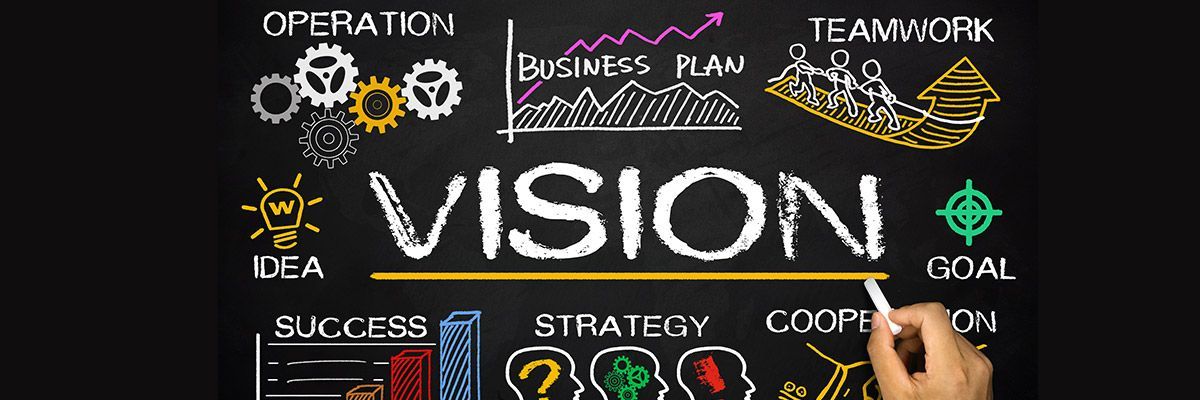
So, what is a leader to do under these conditions? We’ve written previously about VUCA 2.0 (Vision, Understanding, Courage, Adaptability) introduced by Bill George, former CEO of Medtronic. From where we stand, the entire process of effectively leading change begins with vision. In our leadership and coaching practice, we spend a good deal of time helping our clients create a vision, revise their existing vision, or merely reconnecting to their existing vision as a means to center themselves on their purpose. It is nearly impossible to be indifferent as a leader when there is clarity and alignment to the core purpose of why the business exists!


We’ve all heard the familiar definition of insanity, doing the same thing over and over and expecting different results. Being proactive in a VUCA business environment begins with the leader checking their own attitude to ensure they are not directly or indirectly modelling an attitude of indifference. Rather, they are consciously and courageously maintaining an attitude of understanding and adaptability centered around their organizational vision!


How are you leading differently to achieve desired results? If you are not sure, we can help!


Lead Well!

Follow Us:

Our Latest Insights

How are you leveraging AI to differentiate your business?
By Rick Lochner • September 28, 2026
...so that you can do something about it now”

By Rick Lochner • August 26, 2026
...it’s the product of their interaction.” While we’ve written intermittently about systems and processes, the current VUCA (Volatile, Uncertain, Comple, Ambiguous) business environment compels us to spend more time on how important systems thinking is to effective leadership. We are using the title quote from the late Russell Ackoff , who was a pioneer in the field of operations research, systems thinking and management science. And to illustrate the importance of the title quote, we will use a case study we came across a year ago to drive the point home. The project was a joint venture between General Motors and Toyota named the New United Motor manufacturing, Inc. or NUMMI for short. The goal of the venture was to apply the lessons Toyota learned around lean manufacturing to a failing GM plant in Fremont, California. The results were dramatic in the increased productivity of the plant proving that transformation could occur with fundamentally the same personnel in the plant before and after the switch. While the application of lean methodologies succeeded in producing much improved results, the lessons learned were ultimately lost on GM leadership. They concluded that it was the processes alone that created the change since the personnel were basically the same. In fact, it was the interrelationships between the processes that carried the success of the venture overall. Today, that plant is owned by Tesla. So, what does that mean in a VUCA business environment? It means that leaders trying to react and flex to pieces and parts of the system that are impacted by change will struggle to solve the problem in a sustainable way. It is understanding that volatility and/or complexity, while deeply affecting one particular part of the system, ultimately has systemic impacts across other systems as well. It also means that uncertainty and/or ambiguity will make it difficult to ascertain where the solution lies without looking at the business through the lens of systems thinking. Now, just for the fun of it, let’s throw in the impact of artificial intelligence (AI). The AI impact has come at the business environment with a vengeance to the point where we are already seeing the strategic and systemic challenges encountered by early adopters. In our estimation, it once again looks like business leaders are adopting AI as a workforce replacement instead of addressing where AI fits into the current and desired systems approach to the business. Once again, the absence of being able to see the interrelationships between systems creates major blind spots and lessons not learned similar to the NUMMI and GM venture. From our 2022 book, “ Finding the Missing Piece : The Impact of Effective Communications on sustainable Success”, we define systems thinking as, “...a holistic approach focusing on how a system’s components work together, how a system operates over time as well as how it operates in the context of other larger systems.” The only way systems can provide the foundational value to the organization is through leaders who can fully appreciate and understand its benefits, especially in a VUCA business environment! How are your leadership interactions enhancing the business systems? If you’re not sure, we can help . Lead Well!
Green road signs labeled “LEADER” left and “FOLLOWER” right on a pole
By Rick Lochner • July 26, 2026
This is a question every leader of any business (for profit or non-profit) of any size and any industry or market needs to regularly ask themselves. It is a critical question in that it establishes the very reason a leader earns the privilege of being called a leader.